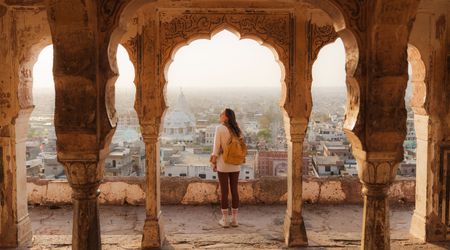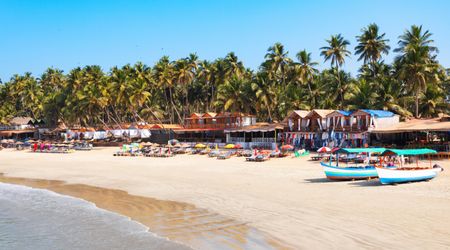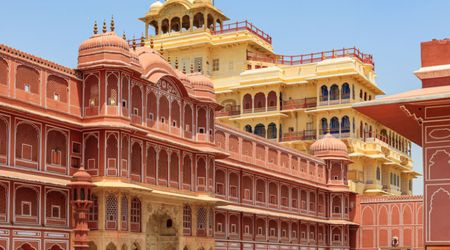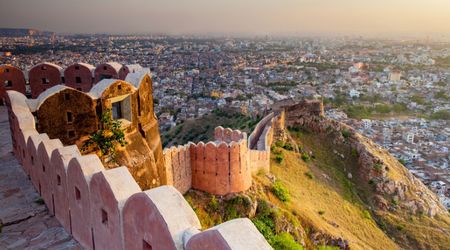
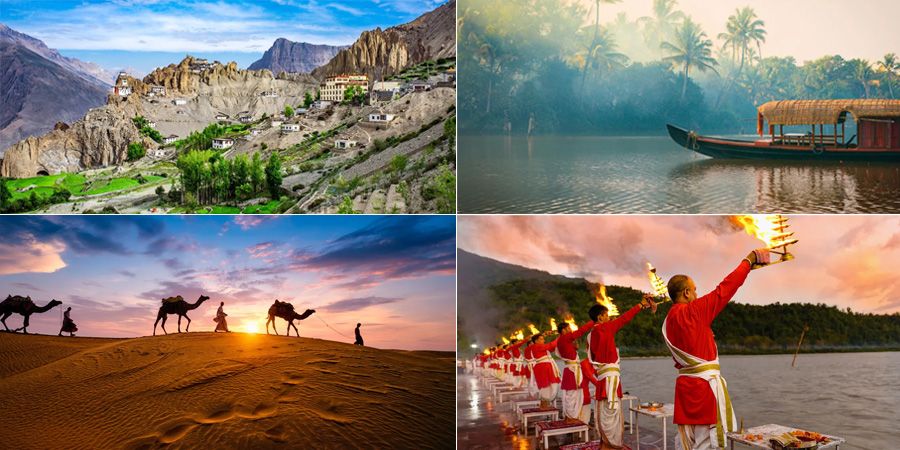


This list of ten places isn't definitive — nothing about India submits to definitions. But these are places that did something to me, that shifted the way I understood not just India but traveling itself. They span deserts and tropical waterways, ancient temple complexes and Himalayan passes where the air thins to a whisper. Some are famous to the point of cliche, others remain genuinely undervisited despite deserving more attention than they get. None of them are easy. India doesn't do easy. What follows is a map of sorts, arranged with purpose, for travelers willing to meet a subcontinent on its own volatile terms.
The Criteria Behind the Ranking: Why These Ten and Not a Hundred Others
India has 40 UNESCO World Heritage Sites. It contains six distinct climate zones. Over two dozen states, each with its own language, cuisine, and architectural tradition. Any honest list of the country's best destinations could run to fifty entries without breaking a sweat, which makes the process of narrowing it to ten an exercise in painful elimination rather than easy selection.
Three factors shaped this list. The first was sensory impact — places that don't just photograph well but physically alter the way you experience a day. The smell of sandalwood in a Karnataka temple, the sound of oars in still Kerala water, the particular quality of light that hits Rajasthani sandstone at four in the afternoon. These aren't decorative details. They're the substance of why you travel somewhere instead of reading about it.
The second factor was accessibility without dilution. Every place here can be reached by a determined independent traveler without a private helicopter or a six-figure budget. Some require effort — Ladakh won't come to you — but none demand the kind of logistical nightmares that turn a trip into a military operation. The third and most subjective criterion: each destination had to offer something you genuinely cannot replicate elsewhere in India or the world. Redundancy kills a list like this.
I deliberately excluded cities like Mumbai and Delhi. Not because they lack merit — they're extraordinary, essential, maddening places — but because they function as gateways rather than destinations. You pass through them. These ten are places you go to, stay in, and carry home with you whether you intended to or not. The order reflects a loose hierarchy of cumulative experience, not a ranking of one over another.
1. The Taj Mahal at Five-Thirty in the Morning, Before the Selfie Sticks Arrive
The most photographed building on Earth still manages to be underestimated. Every image you've seen — on postcards, screensavers, travel brochures — flattens the Taj Mahal into a symmetrical white object against a blue sky. The actual structure does something no photograph has ever captured: it changes color. At dawn, it's faintly pink. By midday, a blinding white. At sunset, a bruised amber. The marble contains tiny imperfections that catch light differently depending on the angle and hour, which means the building you see at 6 a.m. is materially different from the one you see at noon.
Arrive early. The east gate opens at sunrise, and for roughly thirty minutes you'll share the grounds with a manageable number of people — mostly local families, a few photographers, the occasional bewildered jet-lagged tourist. This window matters. By 9 a.m., the complex absorbs between 40,000 and 70,000 visitors daily during peak season, and the experience shifts from contemplative to claustrophobic.
The detail that struck me hardest wasn't the dome or the minarets but the inlay work on the interior walls — semi-precious stones set into marble in floral patterns so precise they look painted until you run your finger across them and feel the seams. Artisans carved single flowers from thirty or more individual stone pieces. Shah Jahan's grief for Mumtaz Mahal gets romanticized into a love story, but the building itself is an argument about obsession: what happens when unlimited resources meet unresolvable loss.
Agra itself is rough, frankly. The city surrounding the Taj is choked with traffic and aggressive touts. Don't let that deter you. The dissonance between the chaos outside the gates and the eerie composure within is part of the experience — maybe the whole point of it.
2. Jaisalmer: A City Built From the Desert It Sits On
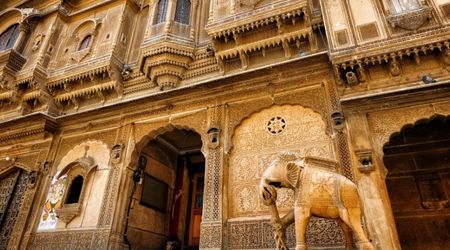
The fort at Jaisalmer isn't a ruin. People live in it — roughly 3,000 of them, in houses and shops and guesthouses stacked inside twelfth-century walls made of the same yellow sandstone as the desert floor. From a distance, the fort appears to rise organically from the ground, as if the earth decided to organize itself into ramparts and bastions. This isn't a preserved monument cordoned off behind ticket booths. It's a functioning neighborhood where laundry dries on medieval battlements and children play cricket in courtyards that predate the Mughal empire.
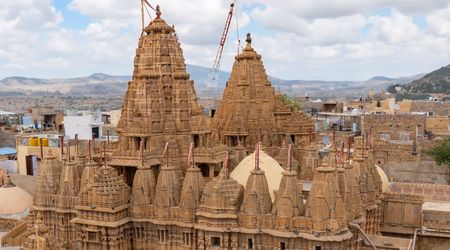
The Jain temples inside the fort are among the most intricately carved structures in India. Every surface crawls with figures, animals, geometric patterns — stone worked into a density of ornament that borders on the hallucinatory. The craftsmen who built them belonged to a tradition that measured devotion in detail, not scale. These aren't large temples. They achieve their effect through compression.
Outside the fort walls, the havelis — merchant mansions built during Jaisalmer's years as a Silk Road trading post — display a different kind of ambition. Patwon Ki Haveli, the largest, has window screens carved from single sandstone slabs so thin they filter sunlight into geometric patterns on the floor. The families who commissioned these homes were competing with each other, and the architecture reflects that rivalry: each facade more elaborate than the last.
A camel safari into the Thar Desert from Jaisalmer exposes you to a silence most travelers have never experienced. No engine noise, no voices, no music — just wind over sand and the occasional grunting complaint from the camel. Spend a night on the Sam dunes, thirty miles out, and the stars look close enough to grab. The Thar isn't empty. It's full of absence, which is a different thing entirely.
3. Varanasi: The City That Refuses to Separate Life From Death
Manikarnika Ghat burns twenty-four hours a day, seven days a week, consuming roughly 200 to 300 bodies daily on open-air pyres along the Ganges. The smoke carries a sweet, heavy smell that settles into your clothes and stays there. This is the oldest continually inhabited city in the world — or at least a strong contender — and it forces you to confront something most destinations actively avoid: the fact that human existence includes decay, ritual, grief, and continuation in the same physical space.
The dawn boat ride is the essential Varanasi experience. Hire a rowboat — not a motorboat, the noise ruins it — and drift south along the ghats as the sun comes up. You'll pass pilgrims performing morning ablutions, yoga practitioners on stone steps, priests arranging marigolds, and stray dogs sleeping in positions of absurd comfort. The ghats function as a single unbroken public space, a living room for the city, where bathing, praying, washing laundry, and cremating the dead happen within meters of each other.
The evening Ganga Aarti ceremony at Dashashwamedh Ghat is spectacular and overwhelming. Priests in matching saffron hold massive fire lamps through a choreographed ritual while bells, drums, and chanting fill the air so completely that conversation becomes impossible. It's beautiful. It's also loud, crowded, and genuinely disorienting if you're unprepared for the scale.
What Varanasi teaches you, if you stay long enough — three days minimum, not the single overnight that most itineraries allot — is that sacred and profane aren't opposites. They're neighbors. The alleyways behind the ghats are narrow enough to touch both walls simultaneously, and they contain silk shops, tea stalls, cow dung, temple bells, and the persistent smell of jasmine garlands mixed with woodsmoke. It's not comfortable. It shouldn't be.
4. Kerala Backwaters: The Country's Slowest, Most Convincing Argument Against Speed
The kettuvallam — the traditional rice barge converted into a houseboat — moves at roughly walking pace through a network of canals, lagoons, and lakes that stretches across central Kerala. The engine idles at a low throb. Coconut palms line both banks so densely they create a green tunnel effect, and the water is the color of strong tea, stained by organic matter. For the first hour, you'll reach for your phone. By the third hour, you'll have stopped caring where you put it.
The Alleppey-to-Kumarakom stretch is the most popular route, and it earns that popularity. Paddy fields flood right up to the waterline during monsoon season, creating a strange illusion where the boat appears to glide through a rice field rather than a canal. Village life unfolds at the water's edge — women washing clothes, fishermen casting Chinese nets inherited from medieval traders, children jumping off bridges into the shallows.
The food on a well-run kettuvallam is worth the trip alone. A cook working from a galley no bigger than a closet produces karimeen — a local pearl spot fish — wrapped in banana leaf and steamed with coconut and curry leaf. The flavors are sharp, specific, and impossible to replicate outside Kerala because the fish itself doesn't travel well. You eat it on the boat's upper deck while the backwaters drift by at their own indifferent pace.
One thing most visitors don't anticipate: the backwaters are ecologically fragile. Pollution from houseboat diesel engines and untreated sewage has degraded water quality in several stretches. Choosing operators who use solar-powered or punted boats isn't just an ethical nicety — it determines whether you're floating through a living ecosystem or a slowly dying one. The beauty here is real, but it's conditional.
5. Ladakh: Altitude Sickness and Clarity in Equal Measure
At 11,500 feet, Leh greets you with a headache. The air holds roughly 40 percent less oxygen than at sea level, and your body needs two full days to adjust before you attempt anything strenuous. Most travelers ignore this advice, hire a motorcycle on day one, and spend day two vomiting into a bucket at their guesthouse. Acclimatization isn't optional in Ladakh. It's the price of admission.
Once your blood oxygen stabilizes, the place opens up. The monasteries — Thiksey, Hemis, Lamayuru — sit on ridgelines and cliff faces in positions that suggest their builders valued spiritual isolation above structural convenience. Thiksey's morning prayer ceremony begins before dawn, with monks chanting in a dimly lit hall while butter lamps flicker and the Indus Valley spreads out far below in shades of grey and rust. The sound carries a resonance that the room's architecture amplifies deliberately — these spaces were engineered for acoustic effect centuries before anyone used that phrase.
The drive from Leh to Pangong Lake crosses Chang La, one of the highest motorable passes in the world at roughly 17,600 feet. The lake itself sits across the India-China border, its water shifting between turquoise and deep blue depending on the depth and time of day. There's nothing at Pangong — no town, no market, very few structures. The emptiness is the attraction. You're looking at a body of water surrounded by bare mountains in a silence so total it has physical weight.
Ladakh's season runs from June through September, with July and August bringing the best weather and the worst crowds on the Leh-Manali highway. The shoulder months offer colder nights but thinner tourist traffic, and the passes remain open. Travel here requires patience, physical resilience, and a genuine tolerance for discomfort — qualities that Ladakh rewards more generously than anywhere else on the subcontinent.
6. Hampi's Boulders: Where a Dead Empire Still Dominates the Skyline
The Vijayanagara Empire collapsed in 1565 after the Battle of Talikota, and the victorious Deccan sultans spent months systematically destroying its capital. They didn't finish the job. Hampi — the empire's ceremonial and commercial center — sprawls across 26 square kilometers of granite boulder fields and palm groves, and what survives is staggering in both scale and condition. The Vittala Temple's stone chariot, its musical pillars that produce distinct notes when struck, the vast royal enclosure with its stepped tank — these aren't fragments. They're substantially intact structures scattered across a terrain that looks like a giant kicked over a pile of rocks.
The boulder landscape predates human settlement by millions of years. Hampi's builders didn't impose a city on the terrain; they integrated into it, carving temples into existing rock faces and using natural formations as walls and foundations. This gives the ruins a surreal quality — enormous carved figures emerge from what appears to be natural stone, and you'll spend minutes studying a boulder before realizing it contains a carved Nandi bull or a Shiva lingam.
The Tungabhadra River divides Hampi into two distinct zones. The south side holds most of the major temples and the official archaeological area. The north side — reached by a coracle, a circular reed boat that spins as it crosses — has become a backpacker enclave with guesthouses, cafes, and rice paddies stretching toward low hills. The contrast is jarring and, depending on your disposition, either charming or irritating.
Rent a bicycle. Hampi is too spread out for walking and too intimate for a car. The paths between temple complexes pass through banana plantations and sugarcane fields, and you'll encounter more monkeys than tourists on most routes. The langurs here are bold and numerous, and they will take your lunch if you leave it unattended.
7. Rishikesh and Haridwar: Sixty Kilometers Apart, Centuries Apart in Character
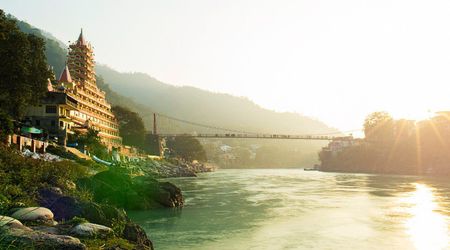
Haridwar is old India — ancient, crowded, and unapologetically intense. The Har Ki Pauri ghat fills every evening with devotees releasing leaf-boat oil lamps onto the Ganges, and the air vibrates with temple bells struck in overlapping rhythms that create an accidental polyrhythm. The holy dip here matters to millions of Hindus in a way that's difficult for secular tourists to fully grasp, but you can feel the weight of it in the density of the crowds and the focused expressions on the faces around you.
Rishikesh, sixty kilometers upstream, operates at a different frequency. The Beatles came here in 1968 to study Transcendental Meditation at Maharishi Mahesh Yogi's ashram, and the town has never quite shaken that association. Today, it functions as India's yoga and adventure-sport capital — a combination that sounds contradictory but somehow works. You can spend the morning in a silent meditation session and the afternoon white-water rafting through Grade III rapids on the same stretch of river.
The now-abandoned Beatles Ashram — officially the Chaurasi Kutia — was closed for decades before reopening as a ticketed site. The meditation cells are covered in graffiti murals, some genuinely accomplished, depicting the four musicians in various psychedelic styles. The forest has begun reclaiming the structures, with roots splitting concrete and trees growing through roofs. It's a ruin of a ruin — a spiritual retreat that became a tourist attraction that became an abandoned shell that became a tourist attraction again.
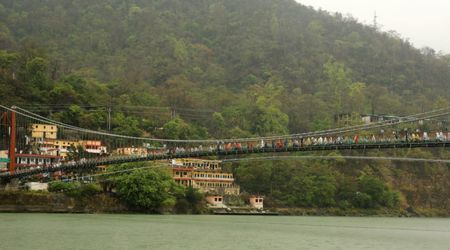
The Laxman Jhula suspension bridge, a Rishikesh landmark for decades, closed to pedestrian traffic in 2020 due to structural concerns. Its replacement, a modern bridge nearby, lacks the swaying, slightly terrifying character of the original. Visit both towns in sequence — Haridwar first, then Rishikesh — to feel the tonal shift from devotional fervor to something mellower and more eclectic. The Ganges connects them physically, but culturally they occupy different centuries.
8. Khajuraho's Erotic Temples: Less Scandalous, More Strange Than You've Been Told
The erotic carvings cover roughly ten percent of Khajuraho's temple surfaces. The other ninety percent depict gods, warriors, musicians, animals, and geometric patterns — a fact that tourist brochures and travel articles consistently fail to emphasize. The sexual figures get the attention because they're explicit and because Western audiences remain fascinated by the idea that a deeply religious culture produced frankly pornographic art. But reducing Khajuraho to its erotic panels misses what makes the place genuinely extraordinary: the sheer density and technical quality of the carving across every surface of every surviving temple.
Twenty-five temples remain from an original group of eighty-five, built by the Chandela dynasty between 950 and 1050 CE. The Western Group, the best preserved, clusters in a manicured park that feels oddly European in its landscaping — green lawns, trimmed hedges, paved paths. The temples themselves are anything but restrained. Every inch of exterior wall carries figures carved in such high relief they appear ready to detach from the stone. The proportions are extraordinary: elongated torsos, heavy-lidded eyes, postures that suggest movement frozen mid-gesture.
The Kandariya Mahadeva Temple, the largest and most ornate, carries an estimated 870 statues on its exterior alone. Standing at its base and looking up, you experience a kind of visual vertigo — the carvings multiply as the tower rises, each band more densely populated than the last, creating a sense of upward motion that the architecture reinforces through a gradually narrowing profile.
Khajuraho sits in rural Madhya Pradesh, far from any major city. This isolation preserved it — invading armies bypassed the temples because reaching them wasn't worth the effort. The town itself is small and quiet, with few distractions beyond the temples. A British army engineer rediscovered the site in 1838, half-swallowed by jungle. That remoteness remains its defining characteristic and, paradoxically, its best protection.
9. The Andaman Islands: India's Most Geographically Improbable Territory
Port Blair sits closer to Myanmar's coast than to mainland India. The Andaman archipelago — 572 islands, only 37 inhabited — occupies a stretch of the Bay of Bengal that most maps don't bother to show in detail. Getting there requires a flight from Chennai or Kolkata, and arriving feels like entering a different country entirely: the vegetation is equatorial, the water is the absurd turquoise of a swimming pool, and the ethnic and cultural composition shifts from mainland Indian norms to something more complex, shaped by indigenous Andamanese groups, colonial-era convict settlers, and post-independence migration.
The Cellular Jail in Port Blair is the essential first stop. Built by the British between 1896 and 1906, it held Indian political prisoners in solitary confinement cells arranged in a radial pattern — seven wings extending from a central tower, designed so that each prisoner could see only the back of another wing. The sound-and-light show held nightly in the courtyard tells the jail's history with a nationalist fervor that can feel heavy-handed, but the building itself communicates isolation and cruelty more effectively than any narration.
Havelock Island — officially renamed Swaraj Dweep — holds Radhanagar Beach, which appears on every "best beaches in Asia" list for a reason. The sand is fine and white, the water clears to visibility of fifteen meters or more, and the jungle backing the beach remains dense enough that you can hear birds you'll never see. Snorkeling at Elephant Beach, a short boat ride away, reveals coral formations and reef fish in concentrations that rival more famous Southeast Asian dive sites.
The indigenous Sentinelese, on North Sentinel Island, have rejected all contact with the outside world, famously killing an American missionary in 2018 who attempted to reach them. The Indian government enforces a strict exclusion zone around the island. Their existence — a community that has chosen complete isolation in an age of global connectivity — adds a strange, sobering dimension to any visit here.
10. Mysore's Palace Is the Least Interesting Thing About Mysore
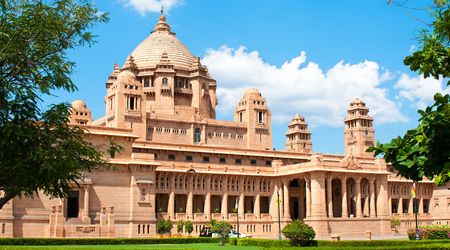
The Mysore Palace draws the crowds — seven million visitors annually, making it India's second most visited attraction after the Taj Mahal. It's undeniably impressive, especially when illuminated on Sunday evenings and during Dasara festival by nearly 100,000 light bulbs that outline its Indo-Saracenic domes and arches against the dark sky. But the palace, for all its gilt and stained glass, is a reconstruction from 1912. The interesting Mysore lives in the streets around it.
Devaraja Market, a few blocks from the palace, operates in a long covered hall where flower sellers stack pyramids of jasmine, marigold, and tuberose so dense the air becomes almost narcotic. The color and scent concentration in this space is physically overwhelming — you smell it before you see it, and the jasmine follows you for blocks afterward. Spice vendors in the same market sell Mysore's signature product: a finely ground sandalwood-scented agarbatti incense that has no equivalent elsewhere in India.
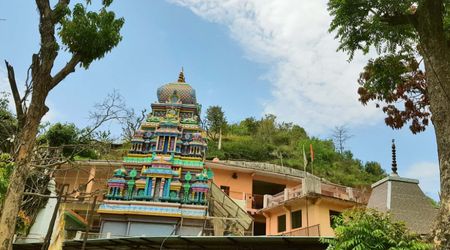
Chamundi Hill, rising above the city's southern edge, holds the Chamundeshwari Temple at its summit and a massive Nandi bull carved from a single granite boulder partway up the thousand-step climb. The bull stands sixteen feet tall, garlanded with flowers and smeared with coconut oil by devotees. From the hilltop, Mysore spreads below in a grid pattern unusual for Indian cities — a legacy of planned urban development under the Wodeyar dynasty that governed the kingdom for over five centuries.
Mysore is also the headquarters of Ashtanga yoga as practiced in the West. The late Sri K. Pattabhi Jois taught here for decades, and students from Europe, Australia, and the Americas still come for months-long intensives at the Shala in Gokulam neighborhood. This gives parts of Mysore an unexpected international character — organic cafes, coconut water stands, and spandex-clad Westerners walking barefoot alongside silk-sari-wearing grandmothers heading to temple. The contrast is distinctly Mysorean.
India doesn't reward the traveler who wants clean categories and neat itineraries. These ten places share one quality: each fundamentally alters the lens through which you see the others. Visit the Taj Mahal after Hampi, and you understand Mughal architecture differently. Sit in Varanasi after the Andamans, and the sensory contrast recalibrates your entire nervous system. The country operates as a single, vast, argumentative organism, and any selection of ten destinations is less a definitive guide than an entry point into a conversation that has no fixed conclusion. You don't finish India. You simply stop, knowing you'll need to come back.