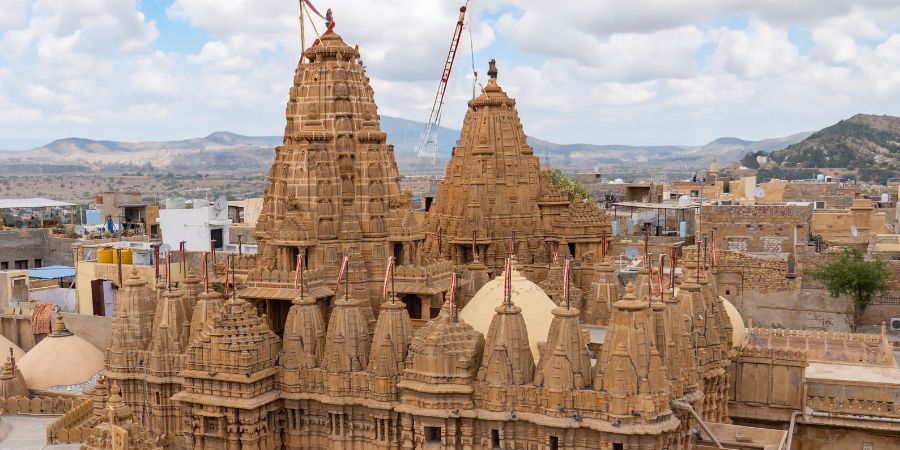


Shantinath Temple doesn't announce itself the way Hindu megaliths or Mughal monuments do. It doesn't compete for your attention. It earns it slowly, through accumulation — one carved pillar, one serene face, one impossible geometric pattern at a time. For travelers drawn to India's spiritual geography but weary of the crowds that swarm Varanasi or the Golden Temple, Jain temple sites offer something rarer: devotion made physical in stone, experienced in quiet.
This particular temple, dedicated to the sixteenth Tirthankara, Lord Shantinath, carries centuries of history in its walls and floors. What follows traces the temple's origins, its deity, its architecture and artistry, its spiritual weight, the town that grew around it, and the practical matter of how to reach it.
Before the First Stone: How a Medieval Faith Left Its Mark in Mortar
Jain temple construction in India accelerated during the medieval period, roughly between the 8th and 12th centuries CE, when Jain communities held significant economic and political influence across western and central India. Wealthy Jain merchants — the Shravakas — funded temples as acts of devotion, and these weren't modest gestures. Temple-building was a declaration of community identity, spiritual ambition, and material capacity all fused into a single structure. Shantinath Temple emerged from this tradition, rooted in a period when Jainism's institutional presence was expanding across Rajasthan, Gujarat, Madhya Pradesh, and parts of Karnataka.
The specific historical origins of Shantinath Temple tie into broader patterns of Jain patronage. Merchant families often commissioned temples not only for personal merit but to anchor trade routes with sacred geography. A temple attracted pilgrims, pilgrims attracted commerce, and commerce funded further construction. The cycle was self-sustaining. Shantinath Temple sits within this logic — a site chosen with both devotional and practical intelligence.
What makes the temple's history distinct from many Hindu sites of the same era is the absence of royal conquest narratives. Jain temples weren't typically built to celebrate military victories or assert dynastic power. They were built to facilitate renunciation. The paradox is hard to miss: extraordinary wealth channeled into structures that honor the rejection of worldly attachment. That tension — opulence in service of asceticism — runs through every carved surface.
Dating the temple precisely is complicated by successive renovations and additions that different generations of patrons undertook. Jain communities have a long tradition of restoring and expanding existing sacred sites rather than abandoning them. The result is a layered structure where medieval foundations support later embellishments, making the temple a living record of patronage across centuries rather than a single moment frozen in stone.
The Sixteenth Tirthankara and the Meaning of His Name
Lord Shantinath occupies a specific position in Jain cosmology: sixteenth in the line of twenty-four Tirthankaras, the enlightened teachers who achieved liberation and showed others the path across the ocean of worldly suffering. His name translates directly — Shanti means peace — and his iconography reflects it. In Jain sculpture, Shantinath is typically depicted in the kayotsarga posture, standing erect with arms hanging straight, or seated in deep meditation. His distinguishing symbol is the deer, which appears on the pedestal of his idol.
According to Jain tradition, Shantinath was born a prince in the ancient city of Hastinapur. He ruled as a Chakravarti, a universal sovereign, before renouncing his kingdom to pursue spiritual liberation. The biographical arc is one Jainism repeats across its Tirthankaras — royal birth, worldly power, voluntary renunciation, severe penance, and eventual omniscience — but Shantinath's association with peace gives his story a particular resonance. Devotees don't pray to him for intervention. Jainism doesn't work that way. They meditate on his example as a model for their own conduct.
The idol inside the temple's sanctum holds a specific gravitational pull for Jain pilgrims. Darshan — the act of seeing and being seen by the deity — is quiet and individual here, lacking the percussion and floral chaos of Hindu temple worship. Devotees offer rice, sandalwood paste, and sometimes saffron, arranged in careful patterns before the image. The ritual is precise, almost geometric in its restraint.
The counterintuitive element is this: Shantinath, despite being a figure of absolute peace and non-attachment, was also described as a warrior king. Jain hagiography doesn't shy from that contradiction. It insists on it. The point isn't that peace comes naturally — it's that peace is chosen, even by those with the power to choose otherwise. That idea permeates the temple's atmosphere more than any incense could.
Stone That Thinks: The Structural Logic Behind Every Arch and Column
Jain temple architecture follows its own grammar, distinct from both the soaring shikharas of North Indian Hindu temples and the gopurams of the South. Shantinath Temple uses a plan common to many Jain sacred structures: a central sanctum (garbhagriha) housing the main idol, surrounded by a circumambulatory path (pradakshina patha), enclosed within a larger mandapa — an open or semi-open pillared hall designed for congregation and ritual. The proportions are deliberate. Jain temple designers worked with ratios meant to evoke cosmic harmony, and every element, from pillar height to doorway width, was calibrated against sacred measurements outlined in traditional Jain architectural texts like the Vastushastra.
The ceiling draws the eye before the walls do. Jain temples are famous for their concentric, layered ceilings — rings of carved stone radiating inward to a central pendant. Shantinath Temple's ceiling work follows this tradition, each ring narrower and more intricate than the one below it. The effect when you stand directly underneath and look up is vertiginous, almost gravitational, pulling your gaze toward a vanishing point overhead.
Pillars here aren't merely structural. Each one carries carved figures, floral motifs, or narrative panels that repay close inspection. The bases tend to be heavier and simpler, the shafts more detailed, the capitals — where the column meets the ceiling — the most elaborate. The progression guides the eye upward, which is also the symbolic direction of spiritual aspiration in Jain thought.
One feature that surprises visitors accustomed to European stone construction: the use of interlocking joints rather than mortar in some sections. Jain builders often fitted stone blocks together with such precision that a blade can't slip between them. The technique demands extraordinary patience and skill, both qualities Jainism prizes. The building, in this sense, doesn't just house the faith. It practices it.
Carved Once, Read for Centuries: The Walls as a Visual Library
The craftsmanship inside Shantinath Temple operates on at least two registers. The first is devotional: narrative panels depicting scenes from Jain scriptures, episodes from the lives of Tirthankaras, celestial beings, and symbolic animals arranged in tiers along the temple walls and entrance ways. The second register is decorative but not frivolous — geometric and floral patterns of such density that they begin to resemble woven textiles more than carved stone. Both registers share one quality: a horror of blankness. Almost no surface is left unworked.
The sculptors responsible for this detailing were likely members of specialized artisan communities — Sompuras in Gujarat and Rajasthan, or Sthapatis in other regions — who passed techniques across generations. Their tools were simple: chisels, hammers, and abrasives. Their patience was not. A single bracket figure — a dancing celestial woman supporting a column joint — might have taken weeks to complete. You can see tool marks on some surfaces if the light hits at the right angle, a reminder that divinity here was produced by calloused hands.
Jain iconography follows strict canonical rules (pramaana). Proportions of Tirthankara figures, the placement of attendant deities (yaksha and yakshini), the size of the parasol above the central image — none of this is left to the sculptor's imagination. The art is precise because precision is itself a spiritual discipline. Errors weren't just aesthetic failures; they were ritual ones.
What catches you off guard is the humor tucked into minor carvings. Small figures in comic postures, animals in unlikely positions, musicians with exaggerated expressions — these appear on secondary panels and pillar bases, far from the sanctum. The artisans, working within strict religious parameters, clearly found room for personality in the margins. The temple is devout, but it isn't humorless. The margins tell you that much.
Silence as Practice: What Devotion Feels Like Without Sound
Jain worship is quieter than most visitors expect. There are no bells clanging, no loudspeakers broadcasting devotional songs, no priests chanting at volume. At Shantinath Temple, the dominant sound during morning puja is the low murmur of Namokar Mantra — the foundational Jain prayer — spoken individually by devotees, sometimes barely above a whisper. The prayer doesn't ask for anything. It offers reverence to the five supreme beings of Jain cosmology. That distinction — offering rather than requesting — shapes the entire atmosphere.
The temple functions as an active site of religious practice, not merely a monument. Shvetambara or Digambara Jain communities (depending on the temple's sect affiliation) maintain daily rituals, including the ceremonial bathing of the idol (abhisheka), the offering of eight sacred substances (ashtaprakari puja), and evening arati. Each ritual has a specific liturgical structure, performed in the same sequence it has followed for generations.
For Jain devotees, visiting Shantinath Temple carries particular significance because of the Tirthankara it honors. Shantinath's association with peace and non-violence (ahimsa) makes the temple a focal point for reflection on those principles. Pilgrims often observe specific dietary restrictions and behavioral codes — complete non-violence, truthfulness, non-possessiveness — with heightened attention during their visit. The temple doesn't just symbolize these virtues; it creates conditions for practicing them.
The surprising element for secular visitors is how physical this spiritual discipline becomes. You remove your shoes. You walk slowly. You sit on cold marble. You eat nothing made from root vegetables, because pulling a root kills the plant. The body is recruited into the practice, not left at the door. Jain devotion doesn't transcend the physical world — it pays closer attention to it than almost any other tradition, monitoring every act for its potential to cause harm.
The Streets That Fed the Sanctum: Life Beyond the Temple Compound
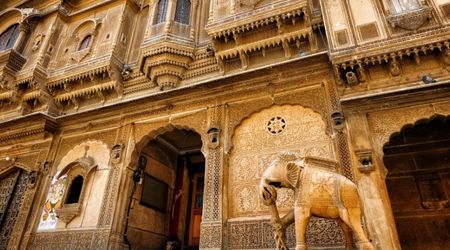
Jain temples didn't appear in isolation. They anchored towns, and the towns in turn sustained them. The settlement surrounding Shantinath Temple carries its own historical sediment — older trade routes, merchant havelis with carved wooden facades, narrow lanes that follow paths established centuries ago when foot traffic and bullock carts determined urban planning. The domestic architecture often echoes the temple's own ornamental vocabulary on a smaller, more personal scale: stone jali screens, carved lintels, courtyard plans oriented toward privacy and ventilation.
The Jain community's historical relationship with commerce means these towns frequently functioned as trade hubs. Grain, textiles, spices, and precious stones moved through them, and the wealth they generated flowed partly into temple construction and maintenance. Walking through the older quarters, you can still read this economy in the built environment. Larger houses cluster closer to the temple, their scale and detail proportional to the families' historical contributions to the sacred site.
Local markets sell items tied to Jain religious life — sandalwood paste, saffron strands, unpolished rice for ritual offerings, small brass or marble idols, and printed copies of Jain scriptures. Street food in these towns tilts vegetarian, often strictly so, respecting Jain dietary principles that exclude not only meat and eggs but also onions, garlic, and root vegetables. A thali in a Jain restaurant near the temple is a study in creative constraint: dal, flatbreads, seasonal vegetables, chutneys, and sweets, all prepared without the aromatics most Indian cooking depends on. The food is plainer. It's also startlingly clean-tasting.
The town's identity is inseparable from the temple, but it isn't defined entirely by it. Local Hindu shrines, small mosques, government offices, and schools share the same streets. India's layered religious geography means sacred Jain sites exist within plural communities, and the interactions between them — sometimes harmonious, sometimes complicated — are part of the place's actual texture.
What Else Pulls You Beyond the Temple Gates
Jain pilgrimage sites rarely stand alone. They tend to cluster, often within a day's journey of one another, because the communities that built them shared trade routes and migratory patterns. Near Shantinath Temple, other Jain temples and heritage sites offer variations on the same architectural and devotional traditions, each with its own character. Some house idols of different Tirthankaras — Adinath, Parshvanath, Mahavir — and their sculptural programs reflect different periods of patronage and artistic style.
Beyond Jain-specific sites, the surrounding region typically offers forts, stepwells, and older Hindu temple complexes that share the same building traditions. Indian stone architecture in the medieval period crossed sectarian lines freely. The same artisan guilds carved Jain temples, Hindu mandirs, and in some cases, secular structures for Muslim patrons. Visiting nearby sites reveals these shared techniques — similar bracket figures, similar ceiling patterns, similar joint work — dressed in different iconographic clothing.
Natural sites deserve attention too. Central and western India's dry scrublands, rocky outcrops, and seasonal rivers create a physical context that shaped both the spiritual and practical aspects of temple life. Many Jain pilgrimage sites sit on elevated ground — hilltops, ridgelines, plateaus — because Jain cosmology associates height with spiritual ascent. The climb to some nearby shrines is itself considered a devotional act, a physical rehearsal of the soul's upward journey.
- Other Jain temple complexes within the region, often housing idols from different periods and sects.
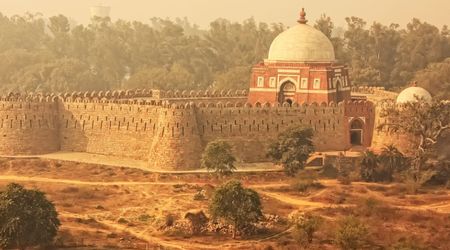
- Medieval forts and fortified town walls that reflect the area's political history alongside its religious life.
- Traditional stepwells (vavs or baolis) that served both practical and ceremonial functions.
- Local museums or heritage collections displaying sculpture, coins, and manuscripts connected to Jain history.
Each of these sites adds dimension to the temple visit, placing Jain heritage within a broader story of trade, power, artistry, and belief that shaped the region over centuries.
Roads, Rails, and the Last Stretch on Foot
Reaching Shantinath Temple depends on where you're starting from, but the general principle holds: you'll arrive by some combination of rail, road, and patience. India's rail network connects most Jain pilgrimage regions to major cities — Ahmedabad, Jaipur, Udaipur, Bhopal, Delhi — though the final leg often requires a bus, shared jeep, or private car. Train travel in India remains the most reliable long-distance option for reaching smaller towns, provided you book reserved tickets in advance through IRCTC, the national rail booking platform. Sleeper class is functional; AC classes are comfortable enough for overnight journeys.
From the nearest railway station, local transport options vary. State-run buses connect major pilgrimage sites, usually with early morning departures timed for devotees who want to arrive for morning puja. These buses are cheap and crowded, but they follow routes that have carried pilgrims for decades. Shared auto-rickshaws and tempo vehicles cover shorter distances between towns. Hiring a private car through a local travel agent or app-based service gives you more flexibility, especially if you plan to visit multiple sites in a single day.
The road conditions in India's temple belts range from smooth national highways to potholed single-lane tracks that test your spine and your driver's reflexes equally. Carry water. Carry patience. The final approach to many Jain temples involves walking — sometimes up stairs, sometimes along a paved path through the temple complex grounds. Remove leather items before entering; many Jain temples prohibit leather belts, bags, and shoes within the precinct, not just inside the sanctum.
Accommodation near major Jain pilgrimage sites often includes dharamshalas — community guesthouses maintained by Jain trusts — that offer clean, basic rooms at minimal cost. These are intended primarily for Jain pilgrims but frequently accept other visitors. Small hotels and guesthouses in the surrounding town provide alternatives. Don't expect luxury. Expect hospitality, which in these communities is its own quiet institution.
Shantinath Temple belongs to a category of Indian heritage that doesn't market itself. No tourism boards print glossy brochures for it. No Instagram influencers have turned it into a trending location. It persists because a living community sustains it — funding repairs, performing daily rituals, sweeping the marble floors before dawn. For travelers willing to slow down, to sit with silence, and to read a building the way you'd read a dense, carefully written book, the temple offers something that louder destinations cannot. India's spiritual architecture speaks in many volumes; Jain temples are among the most precise and least visited. That imbalance won't last, but for now, the quiet holds.