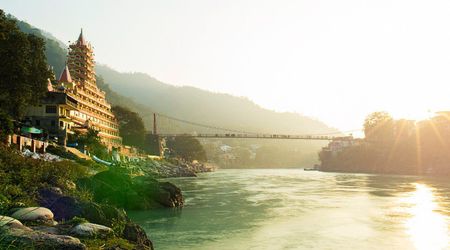


The chai cost seven rupees. The man who sold it to me from a dented aluminum kettle outside Varanasi's Assi Ghat had been pouring since before dawn, his fingers blackened by decades of coal smoke. I sat on a stone step still cool from the night, watched the Ganges catch its first light, and did the math in my head. I'd spent ₹3,800 the previous day — train fare from Lucknow, a clean room near Godowlia, three meals, a boat ride at dusk, and a lassi so thick the spoon stood upright. I still had ₹1,200 left in my daily budget.
India has a way of making money stretch until it becomes almost irrelevant, until the currency of the experience so far exceeds the currency in your wallet that you stop counting. I traveled across six states over twenty-three days, averaging under ₹5,000 a day, and never once felt like I was skimping. This wasn't an exercise in deprivation. It was an education in what India actually costs versus what tourists are told it costs. The gap between those two numbers is enormous, and closing it requires not sacrifice but strategy — knowing where to sleep, how to move, what to eat, and when to show up.
The Seven-Rupee Chai Economy: Why India Rewards the Lean Traveler
India's cost structure operates on a different gravitational principle than most countries tourists visit. The floor is spectacularly low. A plate of chole bhature at a Chandni Chowk stall runs ₹40. A government bus from Jaipur to Pushkar costs ₹230. A dormitory bed at a decent hostel in Fort Kochi goes for ₹400 a night. These aren't hidden prices or special deals — they're the prices that three hundred million domestic travelers pay every day.
The mistake most foreign visitors make is layering Western travel assumptions onto Indian infrastructure. They book through aggregator apps that skim margins, eat at restaurants with English menus and air conditioning markups, and take prepaid taxis instead of shared autos. Each individual choice seems minor. Together, they triple the daily spend without adding a single meaningful experience.
India's budget friendliness isn't just about cheap prices — it's structural. The country runs a vast parallel economy of government-subsidized rail, state-operated tourist lodges, temple food halls serving unlimited thalis for ₹30, and a street food culture so deeply embedded that eating out costs less than cooking at home. The Indian Railways network alone, with its 7,000-plus stations, functions as both transportation and accommodation if you take sleeper trains overnight.
Here's the counterintuitive part: spending less in India often gets you closer to the actual country. The ₹40 thali joint is where the truck drivers and schoolteachers eat. The general compartment on a train is where the conversations happen. The budget lodge run by a family in Orchha will tell you more about Bundelkhand than any heritage hotel's curated "cultural experience." Frugality in India isn't a limitation. It's a passport to a version of the country that money, paradoxically, walls off.
No Spreadsheet Survives Contact with an Indian Railway Platform
A rigid itinerary in India is a fiction waiting to collapse. Trains run late — sometimes by hours, sometimes by a philosophical margin that defies clock-based measurement. Festivals erupt without warning on the Western calendar. A local on a bus tells you about a town you've never heard of, and suddenly your afternoon detour becomes the trip's defining memory. The flexible itinerary isn't laziness. It's the only honest response to how India actually works.
Planning loose means knowing your anchor points — the three or four places you absolutely want to reach — and leaving the connective tissue open. Book your first night's accommodation and your departure city. Everything in between should breathe. I kept a rough compass heading (south from Delhi, eventually east toward Kolkata) and let the route fill itself. This approach saves money in concrete ways: you avoid cancellation fees when plans shift, you can grab last-minute train tickets in unreserved compartments, and you can leave a city the moment it stops being interesting rather than staying because you've prepaid a hotel.
The practical backbone of flexibility is a smartphone loaded with three apps: IRCTC for trains, RedBus for intercity coaches, and Google Maps for local transit. Check availability the night before. Book the morning of. India's transport network is dense enough that you can almost always find a seat somewhere, heading roughly in your direction, within a few hours. The savings from this approach are real — I paid ₹200 for a Jhansi-to-Khajuraho bus ticket that would have cost ₹1,800 on a pre-booked tourist shuttle.
Loose planning also protects your budget from the sunk-cost trap. If a town is overpriced or overcrowded, you leave. No guilt. No lost deposits. The money you save by refusing to commit in advance is money you spend on the things you couldn't have predicted wanting.
The ₹2,000-a-Day Difference Between December and September
Pushkar in November, during the Camel Fair, is a different financial planet than Pushkar in July. Room rates triple. Autorickshaw drivers quote with the confidence of currency traders. The same guesthouse that charges ₹600 a night in the off-season pins a laminated card to its door reading ₹2,000. Timing your travel around India's peak seasons isn't a minor optimization — it's the single biggest lever you have over daily costs.
Peak season varies by region, which works in your favor if you're willing to zigzag. Rajasthan and Goa peak from October to February, when weather is mild and European charter flights arrive. The northeast and Himalayan foothills peak from April to June, when plains dwellers flee the heat. Kerala and Tamil Nadu see surges around December and January. The trick is to visit each region just outside its window — Rajasthan in late September, when the monsoon retreats and hotels are still desperate; Goa in early October, before the shacks even finish rebuilding on the beaches.
Off-season travel in India comes with trade-offs, but they're usually overstated. Monsoon-season Kerala is green to a degree that dry-season visitors never see — the backwaters swell, the air smells of wet earth and cardamom, and houseboat operators cut rates by forty percent. Varanasi in May is punishingly hot, but the ghats empty out, and you can sit alone at Manikarnika at sunrise — an experience that December crowds make impossible.
The counterintuitive reality: off-season India often delivers the better trip. Fewer tourists means more genuine interactions. Emptier trains mean confirmed berths. And the money you save — easily ₹1,500 to ₹2,000 a day — buys you extra days on the road. Time, not comfort, is the real luxury in Indian travel.
The Ziplock Bag That Replaced Three Pharmacy Stops
Every rupee you spend replacing something you forgot to pack is a rupee subtracted from the trip itself. Experienced India travelers know that a carefully chosen bag saves not just weight but money — repeatedly, across weeks. The gear list isn't about brands or adventure-catalog fantasies. It's about the specific, practical items that eliminate the daily micro-expenses India's heat, dust, and chaos generate.
A thin cotton sleeping bag liner, the kind that weighs almost nothing and rolls into a fist, lets you sleep comfortably in budget rooms where the bedding is questionable. Without one, you'll eventually cave and upgrade to a pricier hotel just for clean sheets. A sturdy reusable water bottle with a filter — the Sawyer Squeeze or a LifeStraw — pays for itself within three days. At ₹20 per half-liter bottle, a traveler drinking three liters a day burns through ₹120 daily on water alone. Over three weeks, that's ₹2,500 gone.
The items that save the most are unsexy:
- A ziplock bag of basic medications — Imodium, oral rehydration salts, antihistamines, ibuprofen — bought at home-country prices, which eliminates overpriced pharmacy visits in tourist zones.
- A headlamp, because budget guesthouses in smaller towns experience power cuts, and fumbling in the dark leads to dropped phones and cracked screens.
- A universal sink plug, for hand-washing clothes that would otherwise cost ₹50 per piece at a laundry.
- A padlock, since many budget accommodations provide lockers but not locks.
The biggest packing mistake is bringing too much. Overpackers in India pay porter fees, take more expensive transport because they can't squeeze into shared autos, and miss spontaneous opportunities because their bag is too heavy to carry through a bazaar. Pack for a week, wash every three days. Your bag should weigh under eight kilograms. Anything more, and India starts taxing you for it.
The ₹7 Train Ticket and the Geometry of Indian Transport
Indian Railways sold me a general-class ticket from Agra Cantt to Mathura for ₹7. Seven rupees. Less than a packet of biscuits. The journey took ninety minutes, the compartment was packed to a density that defied spatial logic, and a man sitting across from me shared his homemade parathas. No Uber, no tourist bus, no app-summoned ride will ever teach you that much about a country in ninety minutes.
Getting around India cheaply requires understanding the hierarchy of transport options available for every route. For intercity travel, these typically run in ascending order of cost:
- State-run buses (UPSRTC, KSRTC, RSRTC) — slow, reliable, and absurdly cheap, often ₹1 to ₹2 per kilometer.
- Unreserved general-class trains — no assigned seat, first-come-first-sit, but fares that barely register on a budget.
- Sleeper-class trains — reserved berths, overnight travel that doubles as free accommodation, typically ₹300 to ₹700 for long hauls.
- Private buses on RedBus or regional operators — slightly pricier, but with AC and reclining seats for overnight routes.
Within cities, the math shifts. Metro systems in Delhi, Kolkata, Bengaluru, and Hyderabad cost ₹10 to ₹60 per ride. Shared autorickshaws in cities like Ahmedabad and Lucknow run fixed routes for ₹10 to ₹20. Local trains in Mumbai — the backbone of a city of twenty million — charge ₹5 to ₹15 for journeys that would cost ₹400 by taxi.
The single most expensive transport mistake in India is taking a prepaid taxi from an airport or railway station. These are priced for foreigners and fatigued arrivals. Walk two hundred meters beyond the station exit, open an Ola or Uber app, and the fare drops by half. That two-hundred-meter walk will save you more over a three-week trip than almost any other habit.
The ₹400 Room That Came with a Balcony and a Stray Cat
In Hampi, I stayed in a room that cost ₹400 a night. It had a ceiling fan that worked, a door that locked, a balcony overlooking a banana grove, and a semi-permanent resident — an orange tabby who appeared at dusk and slept on the spare pillow. The shower had a bucket and a mug. The mattress was thin. The Wi-Fi was aspirational. I stayed four nights and never wished for anything more.
India's budget accommodation runs deeper than most travelers realize. Below the Booking.com layer of ₹1,500 to ₹3,000 hotels lies an entire stratum of guesthouses, dharamshalas, ashram stays, and family-run lodges that rarely appear on international booking platforms. Finding them requires walking the lanes near bus stands and temples, asking autorickshaw drivers, or checking Indian platforms like Goibibo and OYO (though OYO quality varies wildly — always check the actual room before paying).
Dharamshalas — pilgrimage rest houses attached to temples and gurudwaras — are India's best-kept accommodation secret for budget travelers. The Golden Temple complex in Amritsar offers free dormitory beds to anyone, regardless of faith. Dharamshalas in Varanasi, Haridwar, and Tirupati charge ₹100 to ₹300 a night. They're clean, quiet, and vegetarian — and they place you inside the spiritual life of a city rather than adjacent to it.
Hostels have arrived in India over the past decade, and the good ones — Zostel, Moustache, GoStops — offer dorm beds for ₹400 to ₹600 in most cities. The social atmosphere suits solo travelers, and the kitchens cut food costs further. But the best budget stays aren't chains or brands. They're the rooms you find by showing up in a town, walking past three options, and choosing the one where the owner offers you chai before quoting a price. That chai is the best quality indicator India provides.
The Thirty-Rupee Thali and the Myth of the Tourist Restaurant
At a roadside dhaba outside Bhopal, I ate a thali — dal, rice, two sabzis, three rotis, a pickle that could strip paint, and a small bowl of kheer — for ₹30. The plates were steel. The rotis came straight off the tawa. The woman cooking didn't glance up from her work. I ate until I couldn't, and the bill didn't change because thalis in India are, by design, unlimited. The concept of portion control is alien to the Indian roadside kitchen.
Food is where India's budget arithmetic becomes almost absurd. Street food across northern India — samosas, kachoris, aloo tikki, pav bhaji — rarely exceeds ₹30 to ₹50 per serving. South Indian breakfast staples — idli, dosa, vada — run ₹20 to ₹40 at local joints. A full meal at a non-tourist restaurant in most Indian cities costs ₹60 to ₹120. Eating three solid meals a day, with chai breaks and the occasional sweet, you can comfortably spend under ₹300 on food.
The tourist restaurant is where this equation falls apart. The moment a menu appears in English with photos of the food and a line reading "We accept all major cards," you've entered a different pricing universe — typically three to five times higher than the street-level norm, with food that's usually worse because it's been calibrated for imagined foreign palates. The butter chicken at a ₹60 dhaba is almost always superior to the ₹350 version at a rooftop café in Paharganj.
The counterintuitive food wisdom in India: follow the crowd, not the reviews. A packed stall with a line means fresh preparation and high turnover, which means safer food. The empty restaurant with the "Hygienic" sign in the window is the one more likely to serve you yesterday's rice. Your stomach's best friend in India isn't caution — it's popularity.
The ₹50 Sunrise at Fatehpur Sikri and India's Free Spectacles
Most Indian monuments charge domestic visitors between ₹10 and ₹50. Some of the country's most extraordinary sites charge nothing at all. Fatehpur Sikri — Akbar's abandoned sandstone capital, a place that makes the Alhambra feel modest — costs ₹50 for the main complex. The Jama Masjid there is free. The light at 6:30 in the morning, when the red stone turns the color of raw honey and you're alone in the Panch Mahal, is not something money can buy or its absence can prevent.
India front-loads its spectacle into public life. The evening aarti at Dashashwamedh Ghat in Varanasi costs nothing. Watching dawn break over the Howrah Bridge from the Mullick Ghat flower market in Kolkata is free. Walking the lanes of Jodhpur's blue city, where houses are painted in shades of indigo that deepen with every monsoon season, requires only functioning legs and a willingness to get lost.
Paid attractions do exist, and the pricing split between Indian and foreign visitors is real — sometimes dramatic. The Taj Mahal charges Indians ₹50 and foreigners ₹1,100. Whether you consider this fair depends on your politics, but the practical response is to budget for two or three premium-ticket sites per trip and fill the rest with India's vast inventory of free or near-free experiences.
Here's what most itineraries overlook:
- Government museums in smaller cities — Salar Jung in Hyderabad (₹20 for Indians, ₹500 for foreigners) holds one of the world's great private collections.
- Temple towns like Madurai, Thanjavur, and Puri, where the architecture rivals any ticketed monument and entry is free.
- Weekly haats (rural markets), where the spectacle of commerce — pyramids of turmeric, stacked copper pots, cattle auctions — is India's truest gallery.
The most expensive impulse in India is the instinct to pay for curated experiences. The country is already performing — in its streets, its kitchens, its train platforms — at full volume, all the time, for free.
India Doesn't Ask How Much You Spent. It Asks How Much You Noticed.
The most memorable moment of my twenty-three days cost nothing. It happened on the Howrah-Chennai Mail, somewhere in the dark flatlands of Odisha. The train had stopped at an unnamed station. A woman on the platform was selling battered paperback novels from a wooden cart. She was reading one of them by the light of a single bulb, entirely absorbed, oblivious to the train and its passengers. The train lurched forward. She didn't look up. I've thought about her more often than I've thought about the Taj Mahal.
Budget travel in India is not about deprivation or cleverness or the gamification of thrift. It's about alignment. The country's most profound offerings — its human density, its sensory overload, its infuriating and gorgeous chaos — exist at the price level where most of its own citizens live. When you spend ₹5,000 a day in India, you're not slumming. You're traveling at the speed at which the country actually moves.
The expensive version of India — the palace hotels, the private drivers, the guided tours with bottled water and sanitized commentary — exists to insulate you from the country itself. It has its place, and there's no shame in comfort. But the India you meet in a sleeper compartment, at a ₹30 thali joint, on the balcony of a ₹400 guesthouse with a stray cat — that India doesn't require your money. It requires your attention.
Every rupee you don't spend is a barrier you don't erect between yourself and the place you came to see. The dhaba owner who feeds you, the stranger who shares his parathas on a train, the temple priest who waves you into a ceremony you didn't know was happening — none of them are checking your budget. They're checking whether you showed up.
And showing up, in India, is the only currency that matters.
Three weeks, six states, and a daily average of ₹4,700 taught me something that no luxury trip ever has: the richness of a place and the amount you spend in it have almost nothing to do with each other. India is perhaps the only country on earth where this is not an aspiration but a mathematical fact. The ₹7 train ticket gets you the same landscape as the ₹3,000 one. The ₹30 thali fills you the same way. The sunrise at Fatehpur Sikri doesn't check your receipt. Travel, stripped to its essentials, is the act of paying attention in unfamiliar places — and India has never charged admission for that.