

Thirteen kilometers northwest of Manali in Himachal Pradesh, Solang Valley sits at roughly 2,560 meters, occupying a broad alpine clearing that the Himalayas seem to have accidentally left unfinished — no thick deodar canopy, no narrow gorge, just an open bowl of grass and sky that invites every conceivable form of outdoor excess.
The valley has become India's most popular proving ground for amateur adventurers, a place where families from Delhi and honeymooners from Kolkata collide with ski instructors, zorbing operators, and roasted corn vendors in a strange, perpetual carnival. But Solang isn't merely a theme park bolted onto a mountainside. Its character shifts so dramatically between seasons that visiting twice, six months apart, can feel like arriving at two entirely different destinations. What follows is an attempt to map those transformations — and to sort the genuine from the gimmicky along the way.
How a Shepherds' Halt Became the Busiest Slope in the Himalayas
Solang Valley's name likely derives from a combination of "Solang" — the nearby village — and "nala," the Hindi word for watercourse. Before the tourist economy arrived, the valley served as a seasonal grazing corridor for Gaddi shepherds moving their flocks between the Kullu Valley floor and the high passes leading toward Lahaul. The meadows that now host ziplines and snow scooter tracks once existed in a cycle of transhumance so old it predated the Kullu kings.
The shift began in the 1980s and accelerated through the 1990s, when the Himachal Pradesh government and private operators identified Solang as a viable ski destination. The valley's open gradient — steep enough for a decent run, gentle enough to forgive beginners — made it an obvious candidate. A small ski lift was installed. Rental shops appeared along the road from Manali. The infrastructure was modest, even rudimentary, but it worked well enough to draw a steady winter crowd.
Summer brought a second wave of commercialization. Paragliding operators, originally concentrated around Gulaba and Rohtang, set up tandem flights from ridges above the valley floor. Zorbing — rolling downhill inside an inflatable plastic sphere — arrived as an import from New Zealand and found an improbable second home here. By the 2010s, the Atal Tunnel project, which would eventually connect Manali to Lahaul-Spiti year-round, brought road-widening and increased traffic through Solang's vicinity.
The paradox of Solang's development is that its popularity has both enriched and eroded it. Concrete structures have crept up the valley's edges. Noise from snow scooters reverberates against slopes that were silent a generation ago. Yet the basic geography — the open bowl, the surrounding peaks, the altitude — remains unchanged, indifferent to whatever humans choose to do at its feet. The shepherds still pass through, though they share the path now with far louder company.
Four Valleys in One: Solang Under Snow, Rain, Gold, and Bloom
Winter, from December through February, buries the valley under snow that can reach a meter deep in heavy years. The meadow becomes a white incline dotted with figures in rented ski suits that are often two sizes too large. Temperatures drop to minus five or six degrees Celsius at night, and the road from Manali can turn treacherous after fresh snowfall, particularly the final stretch where the gradient steepens and ice forms on the asphalt. This is the season that put Solang on the map, and it's still the one that draws the largest crowds — families building lopsided snowmen, couples posing for photos in matching jackets, and a handful of serious skiers trying to carve turns amid the chaos.
Spring thaw arrives in March and stretches into May, peeling the snow back to reveal bright green grass and wildflowers — primarily buttercups and wild roses — along the lower slopes. The air warms quickly at this altitude, and afternoons can feel genuinely mild. Paragliding and ropeway rides resume. The shift from winter's monochrome to spring's saturated greens happens fast, sometimes within a couple of weeks.
Monsoon, from late June through September, transforms the valley into something most visitors never see. Mist sits in the bowl like smoke in a theater. Rain falls almost daily, turning trails to mud and making most adventure activities impractical. The valley empties. Those who do come find it lush, quiet, and slightly eerie — a different place entirely from the postcard version.
Autumn, October through November, is the overlooked season. The air is dry, the sky hard blue, and the surrounding forests of oak and deodar shift toward bronze and amber. Crowds thin dramatically. The temperature sits in a comfortable range during the day, cool enough for a jacket but warm enough to hike without breaking into a sweat every ten minutes. If Solang has a secret, it's probably this window.
The Adrenaline Menu: What's Worth Doing and What's Just Noise
Skiing in Solang is a democratic affair, which is a polite way of saying the infrastructure doesn't distinguish much between ability levels. The slope serves beginners almost exclusively — a broad, moderate incline where local instructors guide tourists through basic snowplow turns. Serious skiers will exhaust Solang's terrain in an afternoon. But for a first encounter with snow and speed, it works. Ski gear rental is available from stalls lining the approach road, and instructors typically charge by the hour, though prices are negotiable if you're willing to bargain with conviction.
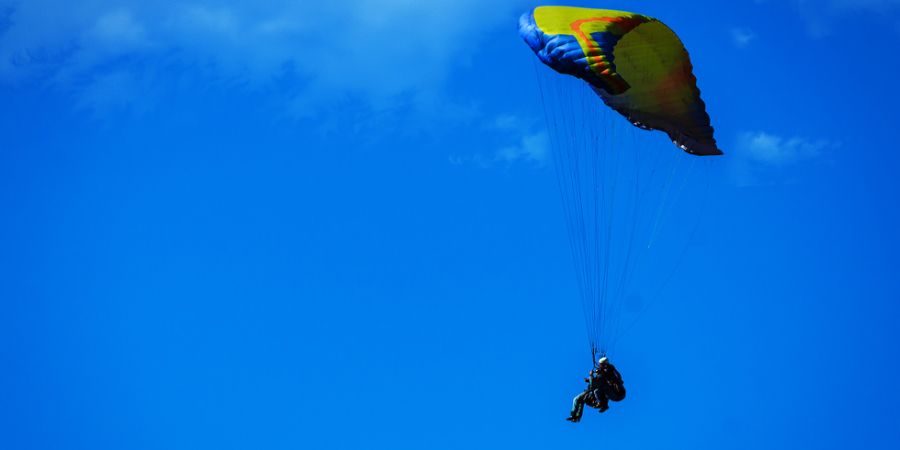
Paragliding is the marquee summer activity. Tandem flights launch from a ridge above the valley and last ten to fifteen minutes, carrying you over the meadow with Beas Kund visible in the distance on clear days. The sensation of lift, that first upward pull when the thermal catches the canopy, is worth the money. Less convincing are the motorized offerings — quad bikes that loop a small muddy track, and snow scooters in winter that generate more exhaust than excitement. These exist primarily for photo opportunities, and if that's your measure of value, they deliver.
Zorbing rolls on, literally and figuratively. You climb inside a transparent inflatable ball and tumble down a grassy slope. It lasts about ninety seconds. Whether that constitutes adventure is a philosophical question each traveler must answer alone. The ropeway, which carries passengers partway up the valley, offers a more contemplative experience — a slow aerial view of the meadow and the ridgeline, useful for orienting yourself before choosing your next move.
The genuinely underrated option is hiking. A trail from Solang leads toward the Beas Kund glacial lake, a moderately strenuous trek of about 14 kilometers round trip that climbs to over 3,600 meters. This route strips away the commercial noise of the valley floor and delivers something the ziplines and snow scooters cannot — altitude silence, the kind where you hear your own pulse.
What the Mountains Do When You Stop Moving
Solang Valley's visual power lies not in any single peak but in the composition of the bowl itself — the way the surrounding ridges frame the sky into a wide, tilted oval that changes color from slate to pink to deep violet between four and six in the evening. The Pir Panjal range rises to the north, its snowfields visible from the valley floor for most of the year. On clear winter mornings, the light hits those upper slopes before it reaches the valley, creating a brief illusion that the peaks are glowing from within while the meadow below remains in cold shadow.
The forests flanking the approach road are dense with Himalayan cedar and blue pine, and they emit a sharp resinous scent that intensifies after rain. In spring, the lower meadows fill with wildflowers that attract butterflies in quantities visible from a distance — not as individual insects but as a collective shimmer across the grass. Birds are present but harder to spot: Himalayan griffon vultures ride thermals above the ridgeline, and if you're quiet on an autumn morning near the treeline, you might catch the metallic flash of a Western Tragopan, one of the Himalayan region's most reclusive pheasants.
The Beas River, still young this far upstream, runs as a narrow, fast-moving channel of snowmelt through rocks below the main road. Its sound is constant — a mid-register roar that provides the valley's ambient baseline. It's easy to ignore after an hour, but step inside one of the roadside dhabas where the concrete walls block the noise, and when you walk back out, it hits you again with fresh force.
What surprises most visitors is the scale. Photographs compress Solang into a postcard. Standing in the actual valley, you feel exposed in a way that's hard to manufacture. The sky is simply too big. The mountains too close. There's no canopy to shelter under, no narrow lane to contain the view. You stand in an open room with a rock ceiling fourteen thousand feet overhead, and the proportions do something unsettling to your sense of self-importance.
The Calendar Gamble: When to Go and What You're Trading
Choosing your season for Solang means accepting a trade-off, and pretending otherwise leads to disappointment. Winter delivers snow, obviously — along with packed roads, inflated hotel rates in Manali, and the real possibility of a wasted day if fresh snowfall closes the road beyond Palchan. The experience is intense but crowded, and you'll share every photo frame with at least a dozen strangers. If snow is your primary draw, January offers the most reliable coverage, though December can deliver early accumulations in heavy years.
Spring, from March to May, is the compromise season. The snow retreats to higher elevations, adventure activities resume in full, and temperatures sit in a comfortable 10 to 20 degree Celsius range during the day. The trade-off is mud. As the snow melts, the meadow and trails turn soft, and the valley floor can feel soggy underfoot, particularly in March. By late April, conditions firm up and the valley hits its visual peak — green grass, residual snow on the peaks, clear air.
Consider the following when deciding your timing:
- Winter (December to February) — best for snow sports, worst for road access and solitude.
- Spring (March to May) — best balance of activities, scenery, and moderate weather, but early spring brings muddy trails.
- Monsoon (June to September) — cheapest accommodation, emptiest valley, but persistent rain cancels most outdoor plans.
- Autumn (October to November) — driest air, fewest tourists, excellent hiking conditions, but no snow and limited organized activities.
Monsoon is for those who genuinely prefer solitude to spectacle. Autumn rewards the hiker more than the thrill-seeker. The season you pick says something about the kind of traveler you are, and Solang, unusually, has a version of itself for each one. The only wrong answer is arriving without knowing what you've signed up for.
Getting There, Staying There, and What Nobody Mentions About the Road
Manali serves as Solang Valley's base, and reaching Manali means flying into Bhuntar Airport — technically Kullu-Manali Airport — roughly 50 kilometers south, or taking a bus from Delhi, a journey of roughly 12 to 14 hours depending on the road and your tolerance for hairpin turns at altitude. Volvo sleeper buses run overnight from Delhi's ISBT Kashmere Gate, and they remain the most common approach for budget travelers. From Manali, Solang is a 13-kilometer drive northwest, typically 30 to 45 minutes by taxi or hired car, though winter conditions can double that time.
Accommodation clusters around Manali rather than in Solang itself. The valley has a few guesthouses and camps, but most travelers stay in Old Manali or along the Mall Road strip and make Solang a day trip. Budget rooms start around 800 to 1,200 rupees per night in the off-season; winter and May peak push those rates to 2,500 or more for the same room. Booking ahead during December and January is essential — walk-in availability evaporates by late morning.
Food options in the valley are limited to roadside stalls selling Maggi noodles, chai, roasted corn, and parathas. The Maggi is universally mediocre, but at 2,560 meters in January, with cold hands and fogged glasses, it functions as therapy. For anything more substantial, eat in Manali before you leave — the cafes in Old Manali serve decent Tibetan and Israeli-backpacker fare, a legacy of the town's long history as a Himalayan crossroads.
One detail nobody warns you about: the road between Manali and Solang narrows significantly after Palchan, and during peak season, traffic jams form that can last an hour or more. Leave early — by 8 a.m. at the latest — or resign yourself to sitting in a car staring at the bumper ahead while the valley waits above.
The Valleys Next Door: What Else the Upper Kullu Basin Holds
Solang doesn't exist in isolation. The upper Kullu Basin spreads a network of valleys and side routes that reward anyone willing to venture beyond the obvious. Kothi, a small village on the road toward Rohtang Pass, sits at roughly 2,500 meters and offers views down the Beas gorge that feel more dramatic than anything in Solang itself — sharper, more vertical, less domesticated. A brief stop there on the drive back recalibrates your sense of what the mountains can do with depth and angle.
The road to Rohtang Pass, now supplemented by the Atal Tunnel, climbs to 3,978 meters and crosses into Lahaul. Before the tunnel opened in 2020, this was a seasonal route, closed from November to May. Now, Lahaul-Spiti's stark, rain-shadow terrain — all rock and dry cold and Buddhist monasteries — is accessible year-round, turning what was once a separate expedition into a feasible extension of a Solang trip. Keylong, the district headquarters of Lahaul, lies about two hours beyond the tunnel's northern portal.
Closer to Manali, the Hampta Pass trek begins from Jobra, about 15 kilometers away, and crosses from the lush Kullu side into the arid Lahaul side over four to five days. It's one of the best moderate-altitude treks in the Indian Himalayas, accessible to fit beginners and rewarding enough for experienced trekkers. The pass sits at 4,270 meters, and the ecological shift from green to grey as you cross is abrupt enough to feel like a border crossing.
Naggar, 20 kilometers south of Manali, holds the Nicholas Roerich Art Gallery inside the Russian painter's former home — a quiet, slightly surreal outpost of early 20th-century Himalayan mysticism. The castle next door, built in medieval Pahari style with alternating layers of stone and wood, is now a heritage hotel. These are not adventure destinations. They're the kind of places that remind you the mountains have cultural sediment as deep as their geological layers.
Solang Valley works best not as a destination but as a doorway — a first encounter with the scale and mood of the Western Himalayas that leaves you restless for what lies farther up the road. The valley itself will entertain you for a day, maybe two. The region it opens onto could hold you for weeks, if you let it. Every traveler who returns to Manali a second time spends less time in Solang and more time following the roads that branch away from it, which may be the most honest compliment a place can receive: it teaches you to want something beyond it.