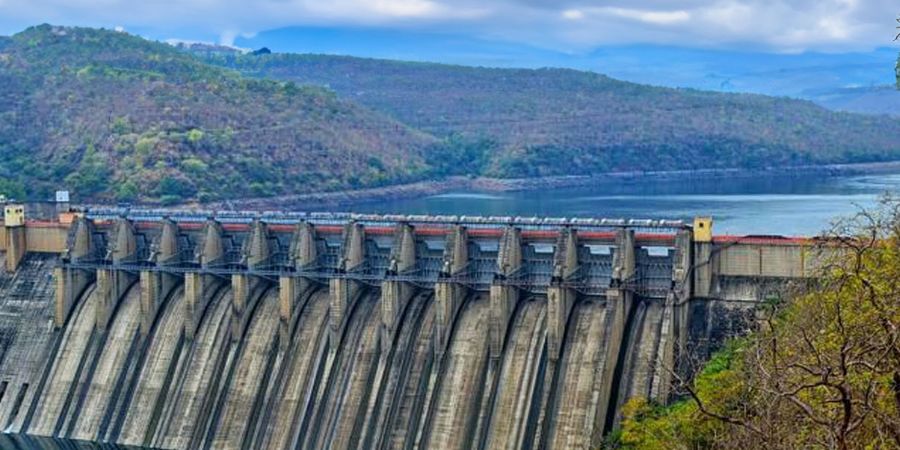


The reservoir, officially named Maharana Pratap Sagar, stretches across 260 square kilometers at full capacity, creating a wetland ecosystem that the Indian government and international bodies have recognized as globally important. Yet most travelers, even those who know Himachal well, drive straight through to Dharamshala or Bir without ever registering that this place exists. What began as an engineering project to tame the unpredictable Beas River has become, over five decades, one of the subcontinent's great accidental wildlife refuges. The dam, the reservoir, the wetland, and the sanctuary that protects it all form a single interconnected story — one that stretches from post-independence infrastructure planning to the flight paths of birds crossing the Himalayas from Central Asia.
When Engineers Looked at the Beas and Saw a Problem to Solve
The Beas River, before the dam, was a seasonal menace. Snowmelt from the Rohtang Pass and monsoon rains would swell it beyond recognition, flooding the plains of Punjab with little warning and less mercy. The idea of harnessing it wasn't new — British engineers had considered it — but the political will and funding only materialized after Indian independence, when large dam projects became symbols of national ambition. Jawaharlal Nehru famously called dams "the temples of modern India," and the Beas was marked for worship.
Construction began in 1961 under the Beas Project, a joint venture between the governments of India and the state of Punjab (Himachal Pradesh was carved out as a separate state only in 1971). The site chosen was a natural gorge near the town of Pong, in what is now Kangra district, where the river narrows between two ridges of the Shivalik Hills. The geology offered a solid foundation for an earth-fill dam, and the valley upstream could hold an enormous volume of water.
The project took over a decade. The dam was finally completed in 1974, and with it came the submersion of dozens of villages, thousands of hectares of agricultural land, and an entire way of life for the communities living in the reservoir zone. Displacement remains a sore point; many affected families were relocated to parts of Rajasthan, where the promised irrigated land turned out to be far less productive than what they'd left behind. The dam's benefits — irrigation for Punjab and Rajasthan via the Indira Gandhi Canal system, hydroelectric power, and flood control — are real, but they arrived at a cost that the displaced communities bore disproportionately.
The ecological transformation was an afterthought. Nobody built Pong Dam to attract birds. But the reservoir's shallow margins, seasonal drawdown zones, and surrounding scrub forests created exactly the kind of habitat that migratory waterfowl need — a consequence no one had planned for and few initially noticed.
A Lake That Carries a Warrior's Name Across 260 Square Kilometers
The reservoir was named Maharana Pratap Sagar in honor of the sixteenth-century Rajput king of Mewar, a figure whose resistance against Mughal expansion has made him a durable symbol of defiance across northern India. The naming was partly political — an assertion of regional pride in a project that displaced local populations and primarily served states downstream. The name stuck, though most locals and birders simply call it Pong Lake or Pong Reservoir.
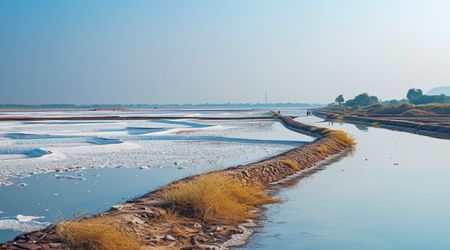
At full supply level, the reservoir covers approximately 260 square kilometers, making it one of the largest man-made wetlands in northern India. Its maximum depth near the dam wall reaches around 50 meters, but the margins are far shallower, creating extensive mudflats and marshy edges that shift with the seasons. During the monsoon, the water rises to swallow grasslands and scrub. By late winter, as the water level drops, it exposes nutrient-rich mudflats that become feeding grounds for tens of thousands of birds.
The reservoir sits at an elevation of roughly 400 meters above sea level, low enough to remain ice-free through winter, which is critical for waterfowl arriving from frozen lakes in Central Asia, Tibet, and Siberia. The Dhauladhar range looms to the northeast, and the Shivalik foothills fold around the lake's irregular shoreline, creating a patchwork of bays, peninsulas, and islands that shift year to year depending on water levels. This irregularity is precisely what makes the habitat so productive — it's not one environment but many, compressed into a single body of water.
The reservoir also supports a fishing economy. Mahseer, catla, rohu, and mirror carp sustain communities around the lake's edges, a livelihood that coexists uneasily with conservation restrictions. The tension between fishing rights and bird protection has never been fully resolved.
An Earth-Fill Giant Holding Back the Himalayas' Runoff
Pong Dam is an earth-fill dam, not concrete — a distinction that matters. Earth-fill dams use compacted soil, rock, and clay rather than poured concrete, which makes them better suited to broad valleys with relatively soft foundations. The dam stretches 1,951 meters across the gorge, stands 133 meters tall from its deepest foundation, and contains a gross storage capacity of approximately 8.57 billion cubic meters. These are not numbers that impress casually, but standing at the dam's crest and looking upstream at the expanse of water they represent puts them in physical perspective.
The powerhouse at the dam's base generates 396 megawatts of hydroelectric power through six turbine units. This electricity feeds into the northern grid, serving Punjab, Haryana, and Rajasthan. The dam also regulates Beas River flows for the Beas-Sutlej Link, diverting water through a tunnel into the Sutlej basin to feed the Bhakra system — a piece of hydrological engineering that connects two of Punjab's five rivers into a single managed network.
Flood control remains the dam's most tangible benefit for downstream communities. Before 1974, the Beas's monsoon surges could devastate towns along the Punjab plain. The reservoir absorbs peak flows and releases water at controlled rates, reducing flood risk significantly. This function is invisible most of the year, which is perhaps why it's undervalued — you only appreciate a dam's flood control when the floods don't come.
The Bhakra Beas Management Board oversees the dam's operations. Maintenance of an earth-fill structure this size is constant and unglamorous: monitoring seepage, reinforcing slopes, managing siltation. The reservoir has lost storage capacity to sedimentation over its five decades, a slow erosion of utility that affects every large dam on Himalayan rivers. No one has solved this problem, at Pong or anywhere else.
Where Mud, Water, and Altitude Conspire to Create a Wetland
The wetland around Pong Reservoir isn't a single habitat — it's a mosaic, and its diversity is what gives it ecological weight. The Ramsar Convention designated it a Wetland of International Importance in 2002, one of only a few dozen sites in India carrying that status. The designation recognized not just the birdlife but the broader hydrological and ecological functions the wetland performs: groundwater recharge, sediment trapping, flood buffering, and carbon storage in its marshy soils.
The geography breaks down into distinct zones. The open water at the reservoir's center supports diving ducks and fish-eating species. Shallow margins, exposed as the water recedes through winter, become mudflats teeming with invertebrates — the fuel that powers long-distance migration. Reed beds and emergent vegetation along certain bays provide nesting habitat and shelter. Surrounding the waterline, dry deciduous forest and subtropical scrub grade into the Shivalik foothills, hosting terrestrial species that benefit from the reservoir's proximity.
Seasonal fluctuation is the engine of this system. If the water level stayed constant, the mudflats wouldn't form, the nutrient cycle would stall, and the birds wouldn't come in the numbers they do. The dam's operational rhythm — filling during the monsoon, drawing down through winter and spring for irrigation releases — accidentally replicates the natural flood-pulse dynamics that sustain productive wetlands worldwide. It's a case where human infrastructure mimics natural processes not by design but by coincidence.
The soil composition along the reservoir's edges is predominantly alluvial clay and silt, brought down by the Beas and its tributaries. These fine sediments retain moisture and nutrients even as the water retreats, supporting the invertebrate communities — worms, crustaceans, insect larvae — that migratory birds depend on. The ecology here is driven from the mud up, not the sky down.
One Hundred Thousand Wings Arriving on Schedule From Central Asia
The numbers are staggering when verified. The Bombay Natural History Society and the Himachal Pradesh Wildlife Department have recorded over 100,000 migratory birds at Pong during peak winter months, belonging to more than 220 species. The bar-headed goose — the same species famous for flying directly over the Himalayan crest at altitudes exceeding 7,000 meters — arrives in flocks so dense they temporarily change the color of the water surface. Counts have recorded over 40,000 bar-headed geese in a single season.
The species list reads like a survey of Central and Northern Asian wetlands: ruddy shelduck, red-crested pochard, common teal, northern pintail, Eurasian wigeon, great crested grebe, Dalmatian pelican, black stork, and the endangered Pallas's fish eagle. These birds arrive from breeding grounds in Mongolia, Siberia, Kazakhstan, and the Tibetan Plateau, following flyway corridors that funnel through the western Himalayas. Pong's location, just south of the first major mountain barrier, makes it a logical first stop for exhausted migrants.
Birders who visit in January find the experience physically overwhelming. The calls, the wing-beats, the sheer biomass of waterfowl concentrated on and around the lake create a sensory density that no telephoto lens fully captures. The best observation points are along the southern and western shores, where shallow bays concentrate feeding birds within reasonable viewing distance. Nagrota Surian and the Ransar area are well-known spots among the small but dedicated birding community that returns each winter.
What surprises many first-time visitors is how little infrastructure exists for birdwatching. There are no elevated hides, no boardwalks, no interpretive centers. You bring your own scope, park at the road's edge, and walk the mudflats. The birds tolerate measured human presence, but there's no curated experience — which, for serious birders, is part of the appeal.
Leopards, Langurs, and the Creatures That Stay Year-Round
The birds monopolize the attention, but the forests and scrublands surrounding Pong Reservoir support a resident wildlife community that persists through every season. Leopards inhabit the Shivalik ridges flanking the lake, though sightings are rare and usually indirect — a pug mark in soft soil, a langur alarm call ricocheting through sal trees. Sambar deer, barking deer, wild boar, and nilgai move through the subtropical dry deciduous forests that climb the hillsides above the waterline.
Rhesus macaques and Hanuman langurs are the most visible mammals, congregating near villages and temple complexes along the reservoir's edge. Indian porcupines, jungle cats, and jackals round out the mid-sized predator and scavenger community. Monitor lizards patrol the shoreline during warmer months, hunting fish stranded in receding pools. King cobras have been documented in the surrounding forests, though encounters are uncommon enough to remain noteworthy when they occur.
The aquatic life beneath the surface also warrants attention. Golden mahseer, one of the most sought-after freshwater sport fish in South Asia, inhabits the deeper sections of the reservoir. The Himachal Pradesh Fisheries Department stocks the lake periodically, and angling permits are available, though regulations have tightened as conservation pressures increase. The relationship between the fish population and the bird population is direct: piscivorous birds like cormorants, Pallas's fish eagles, and pelicans depend on healthy fish stocks, which in turn depend on water quality and seasonal flow patterns.
Reptiles and amphibians are understudied here compared to the birds and mammals. Freshwater turtles, including the Indian softshell turtle, occur in the reservoir, and the surrounding scrub supports a variety of snake species. The full herpetological inventory of the Pong wetland remains incomplete — a gap that reflects where research funding tends to flow and where it doesn't.
A Sanctuary Drawn Around Water, Not Walls
The Pong Dam Lake Wildlife Sanctuary was notified by the Himachal Pradesh government in 1983, nearly a decade after the dam's completion. It covers approximately 307 square kilometers, encompassing the reservoir and a buffer of surrounding land. The sanctuary falls under the management of the Himachal Pradesh Forest Department, which patrols the area with limited staff and funding — a constraint that defines wildlife management across much of India's secondary protected areas.
BirdLife International has designated Pong an Important Bird and Biodiversity Area (IBA). Combined with the Ramsar status, this gives the site visibility in international conservation databases, though such designations carry no binding legal force on their own. The actual protection comes from Indian wildlife law, specifically the Wildlife Protection Act of 1972, which restricts hunting, habitat destruction, and certain land uses within the sanctuary's boundaries.
Enforcement is uneven. Illegal fishing, encroachment by livestock, and occasional poaching of waterfowl persist along the sanctuary's extensive perimeter. The challenge is geometric: a lake with an irregular shoreline stretching hundreds of kilometers cannot be policed the way a compact forest reserve can. Community engagement programs have had mixed results. Some lakeside villages participate in bird monitoring and eco-tourism, while others view the sanctuary restrictions as obstacles to livelihood.
Seasonal bird counts, conducted jointly by the Wildlife Institute of India, the Bombay Natural History Society, and state forest officials, provide the data that justifies the sanctuary's continued protection. These annual censuses are the most concrete evidence of the site's importance, and they show that while some species' numbers fluctuate year to year, the overall function of the wetland as a major wintering ground remains intact. The sanctuary's future depends less on its legal status than on the reservoir's water management — a decision made by irrigation engineers, not ecologists.
Getting There, Staying There, and Knowing When to Show Up
Timing determines everything at Pong. The birding window runs from late October through March, with January typically offering the highest concentrations of migratory species. Arrive in April and you'll find a beautiful reservoir with almost no waterfowl on it. The monsoon months, June through September, bring high water levels, leeches, and impassable approach roads — avoid them entirely for wildlife viewing.
The nearest town of any size is Talwara, on the reservoir's southern edge, reachable by road from Pathankot (about 60 kilometers) or Dharamshala (about 100 kilometers). Pathankot has a railway station connected to Delhi and Amritsar. The nearest airport with regular commercial service is Gaggal, near Kangra, roughly two hours by road. Most visitors rent a car or hire a local taxi from Pathankot; public bus service exists but doesn't serve the specific shoreline points where birding is best.
Accommodation is modest. The Himachal Pradesh Tourism Development Corporation operates a few properties near the lake, and small guesthouses and homestays have emerged in villages like Nagrota Surian and Jawali. Don't expect luxury — rooms are basic, hot water is sometimes a negotiation, and Wi-Fi is aspirational. Packing essentials include:
- Binoculars at minimum; a spotting scope transforms the experience for serious birders.
- Warm layers for early morning sessions — January mornings near the lake hover around 3-5 degrees Celsius.
- Waterproof boots for walking the mudflats, which are exactly as muddy as the name suggests.
- A regional bird field guide — Grimmett, Inskipp, and Inskipp's guide to Indian birds remains the standard.
Entry permits for the sanctuary can be obtained from the Forest Department office at Pong Dam. Fees are nominal. Boating on the reservoir is possible through authorized operators, and it offers access to sections of the lake that shoreline approaches can't reach. Hire a local guide if you can; the birders who live here year-round know exactly which bay holds the pelicans this week and where the fish eagles are nesting.
The most striking thing about Pong is how few people visit relative to its significance. On a January morning, you might share a shoreline with three other birders and forty thousand geese. That ratio won't last forever, but for now it holds — and it changes how the place feels in a way that crowded reserves simply cannot replicate.
Pong Dam exists because India needed to control a river. The wetland exists because nature is opportunistic, colonizing the margins of human engineering with a speed and thoroughness that no planner anticipated. The tension between the dam's utilitarian purpose and the ecological richness it accidentally created defines this place more than any single species or statistic. Across India, reservoirs are being reconsidered not just as water storage but as habitats — a shift in thinking that Pong helped initiate. Fifty years after the Beas was dammed, the most important thing happening at Pong isn't the generation of electricity or the irrigation of Punjab's fields; it's the annual arrival of a hundred thousand birds that treat a piece of infrastructure as if it were always meant to be their home.