

Alappuzha, still called Alleppey by most people who've been here more than once, sits where the backwaters meet the coast. The town functions as a hinge between two entirely different water worlds: the open sea to the west and a labyrinth of canals, lagoons, and rice paddies to the east. The beach itself is just one layer of a place that rewards slow exploration — through its colonial remnants, its seasonal moods, and the network of waterways that made it famous. What follows traces the history, the coastline, the backwaters, the best times to visit, and the corners of Alappuzha most travelers walk past without noticing.
How a Backwater Port Became the Venice of the East — and Then Forgot About It
Lord Curzon, Viceroy of India, reportedly called Alappuzha "the Venice of the East" sometime around the turn of the twentieth century. The comparison was generous but not entirely absurd. In the mid-1800s, Alappuzha functioned as one of the busiest ports on India's western coast. Coir, copra, pepper, and cashew moved through its harbour in quantities that made the town rich enough to build a commercial canal system linking the hinterland to the sea. The Travancore kingdom invested heavily in infrastructure here, constructing the Alappuzha Port in 1762 under Raja Marthanda Varma.
The pier at the beach — that long concrete walkway into the waves — dates to a later era, built in the mid-twentieth century as part of efforts to maintain Alappuzha's relevance as a shipping point. It didn't work. By the time container shipping reshaped global trade, Alappuzha's shallow harbour couldn't compete with Kochi, just seventy kilometres north. The commercial port declined. The town pivoted, gradually and without much fanfare, toward tourism and the coir industry.
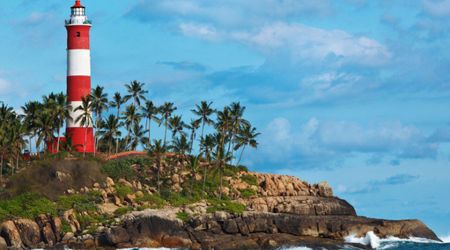
Walk along the beachfront road and you'll spot remnants of that mercantile past: old godowns with tiled roofs, a few crumbling warehouses near the canal junctions, and the Sea View Park area, which occupies land that once served trade rather than leisure. The lighthouse, constructed in 1862 and still operational, was originally placed to guide cargo vessels into port.
What's striking is how little the town trades on this history. There's no heritage museum, no curated walking trail. The old Finishing Point, where snake boat races end during the Nehru Trophy event, carries more local pride than any colonial-era structure. Alappuzha remembers its past selectively — and the things it chooses to remember tell you more about the place than any plaque could.
A Coastline That Earns Its Silence Instead of Selling It
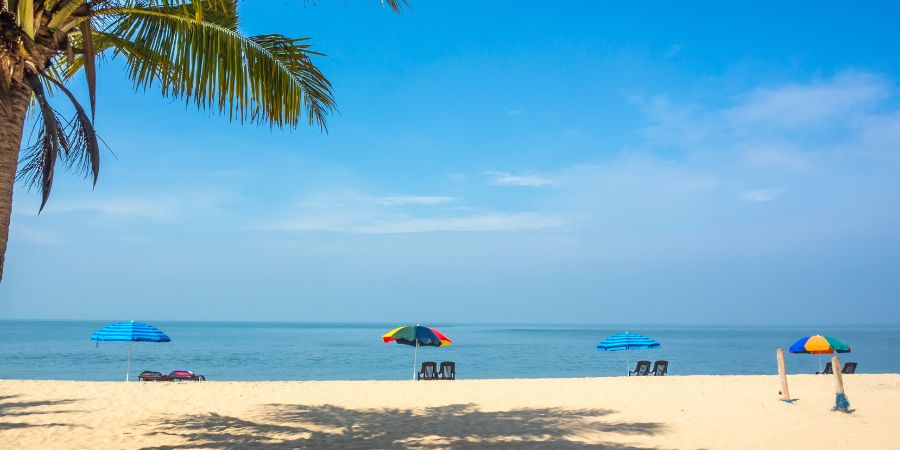
Alappuzha Beach doesn't photograph the way Instagram demands. The sand is dark, closer to charcoal than gold, packed firm by the tide and streaked with mineral deposits. The water is often murky, especially during monsoon months, when the backwaters discharge silt-laden fresh water into the sea. Swimming is possible but not the point — the undertow can be unpredictable, and lifeguards stationed here wave red flags more often than green ones.
The beauty, such as it is, comes from the horizontals. The coastline stretches long and uninterrupted in both directions, and on clear evenings the sun drops into the Arabian Sea with a speed that still surprises you, even if you've watched it a hundred times. The pier divides the beach into two informal zones: to the south, families gather near the park, children ride ponies along the wet sand, and vendors sell sliced pineapple dusted with chili powder. To the north, things thin out fast. Within ten minutes of walking, you're mostly alone with the sound of surf.
The old lighthouse offers a modest climb — a spiral staircase — and from the top you can see the geometry of the town laid out: canals running east, the coast curving slightly south, the green density of palm groves pressing against the urban edge. It's the kind of view that clarifies rather than dazzles.
What catches people off guard is how the beach functions as a social space rather than a resort space. There are no beach shacks serving cocktails, no loungers for rent. Locals use the shore for evening walks, cricket matches on the hard sand, and the kind of unhurried conversation that requires a horizon to stare at. You don't come here to be entertained. You come to slow down until your internal clock matches the pace of the place.
Where Salt Water Meets Fresh and the Map Stops Making Sense
The backwaters begin roughly a kilometre east of the beach, and they change everything about how Alappuzha feels. Step off the coastal road, cross a canal bridge, and the world narrows — literally. Waterways compress to three or four metres wide, lined by coconut palms and the low walls of family compounds. Canoes carrying schoolchildren pass in both directions. The light goes green and filtered. You're in a different country.
Vembanad Lake, Kerala's longest, forms the backbone of this system. It stretches over ninety kilometres, connecting Alappuzha to Kochi in the north and Kumarakom to the east. Houseboats — the converted rice barges called kettuvallam — ply the lake in numbers that have become, frankly, excessive. During peak season, you can count dozens within sight of each other, their diesel engines disturbing the water hyacinth and the quiet in equal measure.
The smarter move is to skip the overnight houseboat and instead hire a small canoe, locally called a shikara, for a few hours through the narrower canals of Kuttanad. This is the rice bowl of Kerala, where paddy fields sit below sea level — among the few places on earth where farming happens beneath the waterline. The bunds that keep the water out are maintained by hand, a daily negotiation with geography that has persisted for centuries.
Birdlife concentrates along the quieter channels: cormorants drying their wings on bamboo stakes, kingfishers flashing electric blue, and egrets standing motionless in ankle-deep water. The canoe operators know where to find them. They also know which toddy shops along the banks serve fresh kallu — palm toddy tapped that morning, slightly fizzy, mildly sour, and gone by noon. The backwaters don't just surround Alappuzha; they define it. The beach is the town's face. The canals are its circulatory system.
Why the Worst Weather Months Might Be the Best Time to Go
Most travel guides steer you toward October through March — the dry season, when the sky cooperates and the sea lies calm. That advice isn't wrong, but it's incomplete. Alappuzha during the southwest monsoon, roughly June through September, is a fundamentally different and arguably more honest version of itself. The rain arrives in dense curtains, turning the canals opaque and raising the water level until it laps at doorsteps. The beach empties. The air smells of wet earth and brine.
June is when the Nehru Trophy Boat Race preparations begin, with snake boat teams training on the Punnamada Lake in downpours. The race itself falls on the second Saturday of August, and if you can handle the crowds and the rain, it's one of the most visceral sporting events in South India — a hundred oarsmen per boat, chanting in unison, the boats long and narrow as blades slicing through the water.
The shoulder months of September and early October bring a particular advantage: room rates drop by thirty to forty percent, the houseboat operators become negotiable, and the landscape reaches its most saturated green. The rice paddies of Kuttanad flood completely, creating a mirror-world where sky and water become indistinguishable.
Summer — March through May — brings punishing humidity and temperatures that push past thirty-five degrees. The beach becomes a dawn-and-dusk affair. Midday belongs to ceiling fans and cold lime soda. December and January draw the densest tourist traffic, with houseboat prices doubling and the Alappuzha backwater routes turning into floating traffic jams. The season you choose shapes the Alappuzha you'll meet. The monsoon version — wet, volatile, green — happens to be the one the place was built around.
Getting There, Sleeping There, and What to Carry in Your Bag
Kochi's Cochin International Airport sits roughly eighty-five kilometres north, connected to Alappuzha by a drive that takes between two and three hours depending on which stretch of NH-66 decides to be under construction that week. Trains run more reliably — the Alappuzha railway station receives direct services from Ernakulam, Trivandrum, Kottayam, and several long-distance routes from Mumbai, Delhi, and Bangalore. The station sits about three kilometres from the beach, an auto-rickshaw ride that should cost between forty and sixty rupees if you bargain before sitting down.
Accommodation clusters into three tiers worth knowing about:
- Budget guesthouses along Cullen Road and near the KSRTC bus stand — clean, basic, and between eight hundred and fifteen hundred rupees per night during off-season.
- Mid-range heritage homes converted to small hotels along the canal edges — these run two thousand to four thousand rupees and often include breakfast with appam and vegetable stew.
- Houseboat stays on Vembanad Lake — one-bedroom boats start around six thousand rupees for an overnight trip including meals, but quality varies wildly; ask to see the boat before committing.
Food deserves its own attention. The Rahmath Hotel on Mullakkal Road serves a fish biryani that locals queue for, and the evening stalls near the beach park fry banana chips and sell steamed rice cakes called puttu with black chickpea curry. Carry mosquito repellent — this is backwater country, and the evenings belong to insects as much as to tourists. A light rain jacket serves you better than an umbrella ten months out of twelve, since the wind off the Arabian Sea makes umbrellas essentially decorative.
One practical note: ATMs exist but can be temperamental, especially on holidays. Carry cash. UPI payments work at most shops and restaurants, but the canoe operators and toddy shops along the canals still deal in notes and coins.
The Coir Museum, the Church, and the Sunset You'll Find Two Kilometres South
The Coir Museum on Beach Road doesn't attract crowds, which is precisely why it's worth an hour. Coir — coconut fibre processed into rope, mats, and mattress stuffing — built Alappuzha's economy before tourism arrived. The museum displays the machinery, the hand-spinning process, and the social history of an industry that employed tens of thousands of workers, mostly women, in conditions that ranged from backbreaking to exploitative. It's a small, slightly dusty collection, but it grounds the town in something more substantial than scenic beauty.
St. Andrew's Basilica, a few minutes inland from the beach, holds architectural interest beyond its religious function. The Gothic-style structure, originally built in the mid-nineteenth century and rebuilt after a fire in 1938, features an interior painted in pale blues and whites that feels distinctly Keralan despite its European design origins. The annual feast in late November draws pilgrims from across the state and transforms the surrounding streets into a temporary market of sweets, toys, and devotional items.
South of the main beach, roughly two kilometres along the coastal road, sits Marari — a fishing village where the sand lightens and the shore widens. The beach here operates without infrastructure: no park, no lighthouse, no vendor stalls. Just nets drying on poles, wooden fishing boats hauled above the tide line, and an emptiness that the main Alappuzha Beach can't offer. Late afternoons here have a quality of light — amber and diffused through sea haze — that photographers chase but rarely catch on the first attempt.
Alappuzha also serves as a launch point for day trips to Kumarakom Bird Sanctuary, roughly thirty kilometres east, and to the weaving village of Chendamangalam, where handloom cotton production continues in small family workshops. These excursions pull you deeper into Kerala's interior, away from the coast, into a rhythm of life that the beachfront only hints at.
Alappuzha doesn't compete with Kerala's more dramatic destinations — the hill stations of Munnar, the wildlife corridors of Thekkady, the cliff-backed beaches of Varkala. It occupies a quieter register entirely. The place works on you through accumulation: the particular way evening light crosses the canal water, the sound of a canoe paddle dipping and pulling, the taste of fresh toddy with its sharp mineral finish. These details don't make a postcard. They make a memory that surfaces unexpectedly, months later, when you're stuck in traffic or staring at a screen.
Most coastal towns in India are either overdeveloped or abandoned to erosion. Alappuzha sits in an uneasy middle — touristed but not consumed, changed but still recognizable to someone who visited twenty years ago. That balance won't last forever; the houseboat fleet grows each year, and the canals absorb more waste than they should. Go now, go slowly, and pay attention to what the place gives you when you stop looking for spectacle. The best thing about Alappuzha Beach is that it never promised you anything extraordinary — and then, quietly, it delivered.