

Old Delhi's main artery stretches roughly 1.3 kilometers from the Red Fort to Fatehpuri Mosque, and every meter of it carries a different trade, a different smell, a different century. This is not one market. It's twelve bazaars folded into each other, flanked by Mughal monuments, Jain temples, Sikh gurdwaras, and some of the most celebrated street food in South Asia. What follows is not a listicle of Instagram spots. It's an attempt to map a place that resists mapping — its history, its traders, its flavors, and the hard-won knowledge you'll need to walk through it without losing your mind or your wallet.
A Princess, a Canal, and 374 Years of Unbroken Trade
Chandni Chowk was designed in 1650 by Jahanara Begum, Shah Jahan's eldest daughter, as the commercial heart of Shahjahanabad — the walled city that Shah Jahan built after he shifted the Mughal capital from Agra to Delhi. The street was not an afterthought or an organic sprawl. It was planned: a wide, tree-lined boulevard with a canal running down the center, fed by the Yamuna, which reflected the moonlight so vividly that the market earned its name. The canal is long gone, buried under successive layers of colonial and post-independence infrastructure. But the commercial DNA Jahanara implanted has never been overwritten.
The market quickly became one of the richest trading centers in Asia. European travelers in the seventeenth and eighteenth centuries described it with a mix of awe and bewilderment. François Bernier, the French physician who spent years at the Mughal court, wrote of the extraordinary density of goods flowing through the street — silks, jewels, spices, horses. By the time the British took control of Delhi after the 1857 uprising, Chandni Chowk had survived Nadir Shah's devastating sack of the city in 1739, which killed an estimated 20,000 to 30,000 people in a single day.
The British narrowed the road, filled in the canal, and imposed colonial architecture over parts of the streetscape. But they couldn't kill the trade. The merchant families — Marwaris, Khatris, Jains — adapted, as they always had. Many of the shops operating today trace their lineage back three, four, even five generations to pre-Partition Delhi. The street has absorbed Mughal grandeur, colonial violence, Partition's mass displacement, and the Indian Republic's bureaucratic indifference to heritage preservation, and it continues to function exactly as Jahanara intended: as a place where money changes hands, relentlessly.
What makes the history unusual is its continuity. This is not a preserved old quarter or a heritage district with plaques. Nobody is curating it. The history persists because the commerce never stopped long enough for nostalgia to take over.
1.3 Kilometers Where Every Inch Has a Landlord
The street runs roughly east to west. The Red Fort anchors the eastern end. Fatehpuri Mosque guards the west. Between them, the road bends slightly, widens in places, narrows violently in others, and sends capillary-thin lanes — called galis — branching off on both sides. These galis are where the real business happens. The main road is the artery; the galis are the organs. Each gali specializes. One sells only electrical fittings. Another, only wedding cards. A third, only stainless steel utensils. The specialization is not quaint or decorative. It's ruthlessly functional — buyers know exactly which lane to enter, and competition between adjacent shops keeps prices tight.
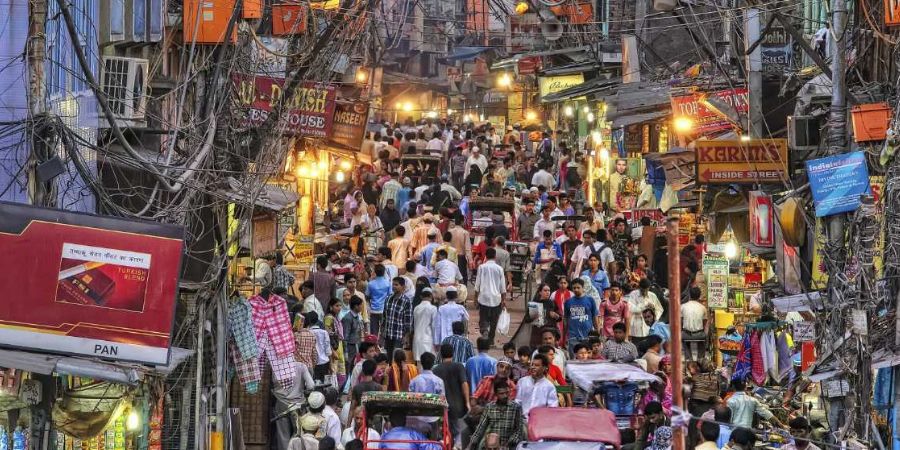
The streetscape itself is a vertical puzzle. Ground floors are shops, many no wider than two meters, crammed floor to ceiling with inventory. Above them sit storage rooms, workshops, and sometimes residences where families have lived for generations. Wiring runs in thick, tangled bundles from pole to pole, a visual shorthand for the informal engineering that keeps the whole operation running. The recent pedestrianization of certain stretches — completed around 2021 as part of the Chandni Chowk Redevelopment Project — widened sidewalks, restricted vehicle access during peak hours, and added sandstone paving. Opinions among shopkeepers range from cautious approval to open hostility; some say foot traffic increased, others complain deliveries became a nightmare.
The character of the street shifts block by block. Near the Red Fort, you'll find tourist-facing shops and cheaper goods. The middle stretch around the Town Hall gets denser, louder, more wholesale-oriented. Toward Fatehpuri, the spice market and dry fruit traders dominate, and the air thickens accordingly. There is no single Chandni Chowk. There are a dozen of them layered on top of each other, and you'll encounter a different one depending on the hour, the day of the week, and how deep into the galis you're willing to go.
Twelve Bazaars Sharing One Address
The term "Chandni Chowk" is misleading. Visitors arrive expecting one bazaar and discover an interconnected network of specialized markets, each with a distinct identity. Kinari Bazaar, just off the main road, is the place for wedding accessories — zari borders, sequined trimmings, decorative tassels, costume jewelry. The shops here are stacked so high with glittering material that natural light barely penetrates. Dariba Kalan, one of the oldest lanes, has traded in silver and gold jewelry since the Mughal era; it's also where you'll find traditional ittar, or perfume oil, sold from small glass bottles that look unchanged since the eighteenth century.
Khari Baoli, near Fatehpuri Mosque, claims the title of Asia's largest wholesale spice market — a claim difficult to verify but easy to believe once you've stood inside it and felt your eyes water from the airborne chili dust. Nai Sarak specializes in books, stationery, and school supplies; during the weeks before the academic year begins, the lane becomes nearly impassable. Ballimaran is known for eyeglasses and shoes, and carries literary weight as the street where the great Urdu poet Mirza Ghalib lived and died.
Other bazaars worth noting:
- Chawri Bazaar handles paper, brass, and hardware in staggering wholesale volumes.
- Bhagirath Palace is India's largest wholesale market for electrical goods and LEDs — an entire building complex humming with light.
- Meena Bazaar, near Jama Masjid, sells fabrics, embroidered garments, and prayer accessories.
- Lal Kuan trades in sanitary fittings and plumbing supplies, unglamorous but enormous.
The defining trait of all twelve bazaars is that wholesale and retail exist simultaneously. A shopkeeper will sell you a single spool of ribbon and, minutes later, negotiate a 500-kilogram order for a wedding planner. This dual function is what keeps prices accessible and the atmosphere permanently intense.
Ghalib's Street and the Gurdwara That Feeds Thousands
Chandni Chowk's monuments don't sit apart from the market. They're embedded in it, sometimes literally sharing walls with shops. The Red Fort, a UNESCO World Heritage Site, forms the street's eastern backdrop, but most visitors see it from the outside while shopping and visit separately. More immediately present is Sis Ganj Sahib Gurdwara, the Sikh temple marking the site where Guru Tegh Bahadur, the ninth Sikh Guru, was executed in 1675 on the orders of Mughal emperor Aurangzeb. The gurdwara's langar — the communal kitchen — feeds thousands of people daily, regardless of faith, and you can walk in off the street, cover your head, and eat for free. Few monuments anywhere in the world integrate so directly into the daily rhythm of the neighborhood around them.
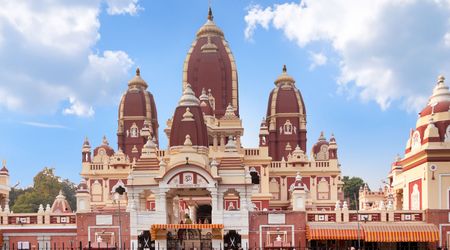
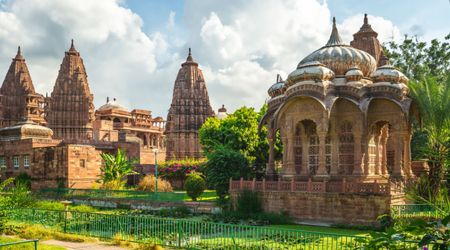
At the western end, Fatehpuri Masjid, built in 1650 by one of Shah Jahan's wives, Fatehpuri Begum, anchors the spice market. Its courtyard provides a rare pocket of quiet. Between the two endpoints, the Jain temple known as Lal Mandir — recognizable by its red sandstone facade — sits directly on the main road. It includes a bird hospital on its upper floors, a functioning avian clinic where injured pigeons and other birds receive genuine veterinary care. The hospital treats between 15,000 and 20,000 birds annually, a detail that tends to stop visitors in their tracks.
Ballimaran, the lane of eyeglass sellers, contains the modest haveli where Mirza Ghalib spent his final years. The house has been converted into a small museum, though "museum" is generous — it's a few rooms with some reproductions of his letters and verses. The real monument to Ghalib is the neighborhood itself, which still carries the mixed Hindu-Muslim character of the Delhi he wrote about. Sunehri Masjid, the small golden mosque near Kotwali, saw Nadir Shah sit on its roof and order the massacre of Delhi's residents in 1739. The mosque is easy to miss. The history isn't.
You Don't Eat in Chandni Chowk — Chandni Chowk Eats You
The food here is not a side attraction. For many visitors, it's the primary reason to come. Paranthe Wali Gali, a narrow lane off the main road, has been serving stuffed parathas since the 1870s. The fillings range from standard (potato, cauliflower) to aggressively inventive (rabri, mixed dried fruit, even banana). Each paratha arrives glistening with ghee, accompanied by a lineup of chutneys and pickled vegetables. Two parathas constitute a full meal for most humans; three is an act of ambition you may regret on a hot day.
Natraj Dahi Bhalle, operating since 1940, serves a single dish — dahi bhalle, soft lentil dumplings in yogurt with tamarind chutney — and does it with the precision of a place that has had eighty years to refine its ratios. The tang of the yogurt, the sweetness of the chutney, and the gentle heat from roasted cumin powder arrive in exact balance. Old Famous Jalebi Wala, near the intersection with Dariba Kalan, fries jalebis in enormous kadhai pans from early morning; the best time to arrive is before 9 a.m., when the batter is freshest and the queues shortest.
The non-vegetarian food concentrates around the lanes near Jama Masjid, technically adjacent to but distinct from Chandni Chowk proper. Karim's, established in 1913 and claiming lineage to Mughal court cooks, serves mutton korma, seekh kebabs, and nihari — a slow-cooked stew traditionally eaten at dawn. Expect no ambiance. The tables are steel, the lighting fluorescent, and the food is better than most restaurants charging five times the price.
The counterintuitive truth about Chandni Chowk's food: the older and shabbier the stall looks, the more likely it is to be exceptional. Visual polish here correlates inversely with culinary seriousness.
Where Chili Dust Hangs in the Air Like Weather
Khari Baoli operates on a scale that makes Western spice shops look like hobbyist operations. The market handles bulk quantities of dried chili, turmeric, cumin, coriander, fenugreek, dried mango powder, asafoetida, cardamom, cinnamon, and dozens of spice blends destined for kitchens across northern India and beyond. Sacks sit open in front of shops, heaped past shoulder height, and the traders work surrounded by a permanent haze of fine spice powder. If you have any respiratory sensitivity, you will know it within thirty seconds of entering the lane.
The business model is wholesale-dominant. Buyers from restaurants, catering companies, and smaller retail shops across Delhi NCR come here because prices run 30 to 50 percent lower than packaged retail. But individual consumers can buy too, typically in minimum quantities of 250 grams to a kilogram. The quality varies — some vendors sell premium single-origin spices, others deal in blended or lower-grade product. The difference isn't always visible; smelling and tasting before buying is expected, not rude. Crush a few cumin seeds between your fingers. If the aroma is sharp and immediate, it's fresh. If it's dusty and flat, walk to the next shop.
Dry fruits and nuts share the same market. Almonds, cashews, raisins, pistachios, figs, and dried apricots arrive from Afghanistan, Iran, and Kashmir, and prices fluctuate seasonally. The weeks before Diwali and Eid see the highest demand, with shopkeepers negotiating bulk orders for gift boxes that will circulate across the city. Khari Baoli also stocks herbs, dried flowers, and ingredients for traditional Ayurvedic and Unani medicine — neem bark, dried rose petals, ashwagandha root.
The market has operated from this location for over three centuries. The Gadodia family, after whom the main building is named, has presided over the trade for generations. Modernization has introduced some digital billing and online wholesale ordering, but the physical market remains the price-setting hub. If you want to understand how Indian home cooking actually works — the raw economics of flavor — this is the place where the supply chain begins.
The Difference Between Visiting and Surviving
Chandni Chowk is not hostile, but it's indifferent to your comfort. The single most useful thing you can do is arrive early — by 9 a.m. on a weekday. By noon, the foot traffic becomes genuinely oppressive, and by mid-afternoon on a Saturday, forward movement through certain galis slows to a shuffle. Tuesday is the lightest day for shopping, as some sections observe a traditional weekly closure. Avoid the days before major festivals entirely unless you specifically want to experience commercial pandemonium.
Footwear matters more than you think. The ground is uneven, intermittently wet, and littered with obstacles ranging from packing material to stray electrical cables. Closed-toe shoes with decent grip will save you from a dozen small miseries. Dress in light, breathable clothing — the galis trap heat like ovens. Carry a small crossbody bag rather than a backpack; anything on your back will snag on doorframes, other people's packages, and the endless stream of handcarts.
Bargaining is expected in most shops, but the margin is narrower than tourists assume. Wholesale competition keeps base prices relatively honest. A reasonable target is 10 to 20 percent off the stated price — pushing harder than that often wastes everyone's time. Fixed-price food stalls don't negotiate, and neither do the older, established jewelers in Dariba Kalan.
Some practical survival notes:
- Keep cash in small denominations; many shops don't accept cards, though UPI digital payments are increasingly common.
- The public restrooms near Town Hall and at the gurdwara are the most reliable options.
- Stay hydrated, but buy sealed water bottles rather than street drinks unless you have an iron stomach.
- Photography is fine in public spaces but ask before shooting inside shops — some traders dislike it, particularly jewelers.
The experience rewards patience. If you arrive expecting efficiency, you'll leave frustrated. If you arrive expecting to get lost, eat too much, and stumble onto things you didn't know existed, you'll leave satisfied.
Getting In, Getting Out, and Knowing When You've Had Enough
The Delhi Metro is the sanest way to reach Chandni Chowk. The Yellow Line stops at Chandni Chowk station, depositing you directly onto the main road near the Red Fort end. Auto-rickshaws and taxis can get you close, but traffic in Old Delhi is a form of competitive suffering — expect the last kilometer to take longer than the preceding five. If you're coming from New Delhi Railway Station, the walk takes about 15 minutes through Chelmsford Road, or you can take the Metro one stop.
The best visiting window runs from approximately 9 a.m. to 1 p.m. for shopping and 8 a.m. to 10 a.m. for food. Afternoon visits work if you're targeting a specific bazaar and know exactly where you're going. Evening visits, particularly post-6 p.m., offer a different atmosphere — the wholesale traders close, the lights come on, and the food stalls enter their second peak. The winter months (November through February) are the most physically comfortable; Delhi summers regularly exceed 45 degrees Celsius, and navigating Chandni Chowk in that heat is an endurance event.
A few logistical details that guidebooks often miss:
- The Hop-On Hop-Off tourist bus stops near the Red Fort, but walking is the only way to experience the interior galis.
- Licensed cycle rickshaw rides from the Metro station to Fatehpuri Mosque cost roughly 30 to 50 rupees — agree on the price before sitting down.
- Heritage walking tours, some offered by organizations like Delhi Heritage Walks, provide context that solo visits can't replicate, particularly for the monuments and havelis in the back lanes.
- The nearest hospital with an emergency department is Lok Nayak Hospital on Jawaharlal Nehru Marg, about a 10-minute drive south.
Three to four hours is enough for a focused visit. A full day allows you to eat, shop, wander, and still leave energy for the evening. Two days, split between the eastern and western halves, is how the serious get it done.
Chandni Chowk doesn't exist for visitors. It exists for trade, for worship, for the daily feeding of a city that has been fed from this same strip of earth since the Mughal dynasty was still in power. The market's refusal to prettify itself, to smooth its edges for tourism, is precisely what makes it irreplaceable. You can buy spices on Amazon. You can order jalebis from a delivery app. But you cannot replicate the experience of standing in Khari Baoli with chili dust in your lungs and three centuries of commercial history pressing in from every direction. Delhi has reinvented itself at least eight times across its recorded history. Chandni Chowk has outlasted every version, and it will outlast this one too — not because anyone is preserving it, but because it never stopped being necessary.