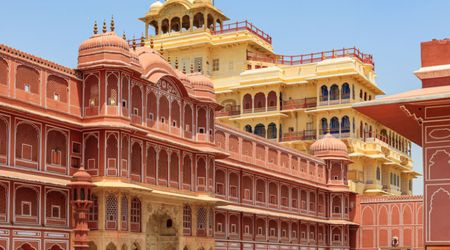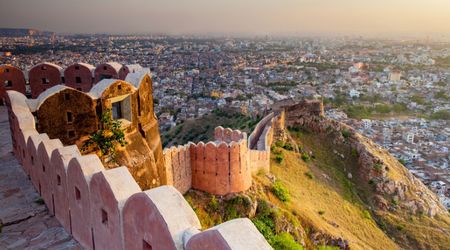


Panna Meena Ka Kund is a hidden wonder that waits quietly in the shadow of Amer Fort, just outside Jaipur. While Amer Fort attracts crowds with its royal halls and battlements, this stepwell feels like a secret treasure tucked away behind yellow sandstone walls.
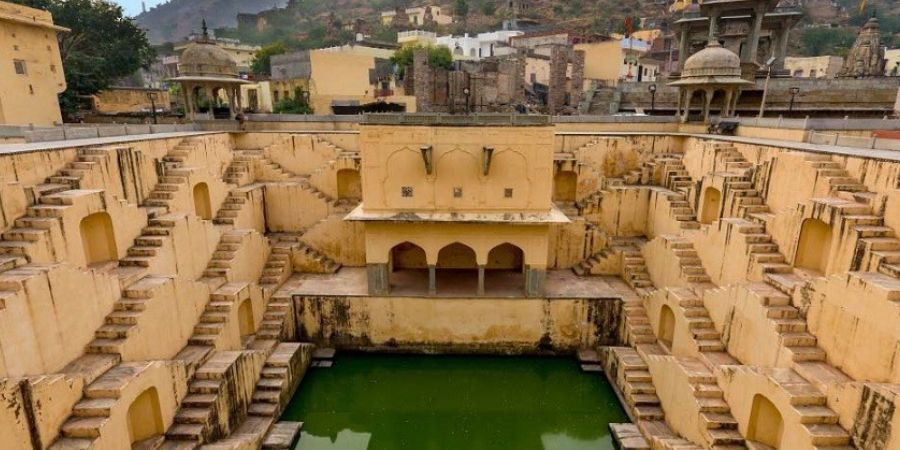
Walk up to it in the early morning, and you’ll see how the sun paints perfect patterns across the zigzag steps. The steps look like a puzzle carved into the earth, and the still water below mirrors the sky.
More than just a place to collect water, this stepwell is a storybook in stone. It tells tales of clever engineering, old traditions, and community life in Rajasthan’s dry heart.
A Stairway Built from Legends and Needs
The history of Panna Meena Ka Kund is wrapped in stories passed down through generations. Most historians agree it was built in the 16th century, likely under the reign of Maharaja Jai Singh of Amer.
However, older legends suggest it was the Meena community, the original inhabitants of Amer, who first designed this stepwell. Some people believe it is named after Panna Meena, a respected Meena leader. Others say it was created by Panna Miah, an official in the royal court who wanted to help the community.
No matter which story you choose to believe, the purpose was always the same: to collect and store precious rainwater during the monsoon. In a place where summer temperatures easily cross 40°C, stepwells were essential for survival.
A Community’s Heartbeat
Panna Meena Ka Kund was more than a place to fill pots. For centuries, it was the centre of daily life.
Women gathered on the cool steps to talk, children played on the ledges, and elders found shade in the chhatris above. There’s even a tale that, every year on Deepavali, the Meena clans came here to bathe together.
One year, the Rajputs used this gathering to attack and claim Amer. Though no one can say for certain if the story is true, it adds to the mystery that surrounds the kund.
Stone Geometry: A Design That Defies Time
The design of Panna Meena Ka Kund is a perfect example of Rajput skill and vision. The square tank has eight levels and about 1800 steps, carved in a repeating crisscross pattern on three sides.
From above, it looks like a giant staircase flowing down to the water. The builders used yellow sandstone, which absorbs and reflects the sunlight in different ways throughout the day.
In the morning, the steps look golden. By afternoon, they turn a pale cream. Here’s what makes this place so special:
- Chhatris and Gazebos: At the corners, small domed shelters provide shade and lovely views of the hills around Amer.
- Symmetry and Precision: Each step is perfectly measured, so you can reach water no matter how high or low it is.
- A Natural Cooling System: As you walk down the steps, the temperature drops, creating a cool, calming space.
- Whispers of Secret Passages: Locals tell stories of tunnels beneath the stepwell, though they remain hidden to this day.
The Best Corners to Explore
Every part of Panna Meena Ka Kund offers something different to admire.
The Main Stairways
Most visitors stop to photograph the repeating zigzag steps. When the light hits just right, the shadows create striking patterns across the walls.
The Central Pool
At the very bottom is a quiet, reflective pool of water. Even in the driest months, you’ll often find a little water collecting here.
The Northern Chamber
On the north side, there is a small room once used for rituals. Families still come here before weddings to perform purification ceremonies.
Temples Nearby
Just beside the kund stand the Ambikeshwar Mahadev Temple and the Lakshmi Narayan Bihari Ji Temple. Both are simple, old shrines that give the area a peaceful energy.
Traditions Still Alive
Even though Panna Meena Ka Kund is centuries old, it remains part of local life.
- During the monsoon, children come to swim and splash in the rising water.
- Before weddings, families visit to perform rituals.
- On religious holidays, the steps are filled with prayers from people.
Heritage walks often include this stepwell. Guides share stories of their past and help you discover little-known facts. If you’re lucky, you might catch a small festival or a film crew shooting here—Bollywood movies like Prabhu Deva’s Dabangg 3 (2019) and Shashank Khaitan’s Dhadak (2018) have used it as a backdrop.
Best Time to Visit
October to March is the best time to visit. During these months, the air is cool, and you can spend more time walking around without the heat overwhelming you.
If you want to see the stepwell at its most beautiful, plan your trip in the early morning or late afternoon.
- Morning Light: The soft sun makes the sandstone glow warm and golden.
- Evening Glow: As sunset nears, the light turns richer, and the steps look like a giant mosaic of gold and shadows.
Avoid summer if you can—the midday heat can be intense.
How to Reach Panna Meena Ka Kund
Reaching Panna Meena Ka Kund is simple, especially if you’re already exploring Amer Fort. Here’s how:
By Air
The nearest airport is Jaipur International Airport (JAI), about 20 km away. Taxis and ride-sharing apps are easy to book. The drive takes 55–60 minutes, depending on traffic.
By Train
Jaipur Railway Station is 13 km from the stepwell. You can take an auto-rickshaw or taxi for a quick ride to Amer.
By Road
If you’re travelling by car, Amer is well-connected by good roads. From Jaipur city centre, you can drive or take a bus to Amer Fort. From the fort, it’s a short 10–15 minute walk to the kund.
Local tuk-tuks are also an affordable option. Just agree on a price before starting your ride.
Panna Meena Ka Kund is not just an old water tank; it is a place where geometry, history, and nature meet. Standing on its edge, you can almost hear the voices of all the people who once gathered here, carrying pots, sharing stories, and escaping the heat. In a region famous for palaces and forts, this hidden gem shows that even the quietest corners hold treasures.