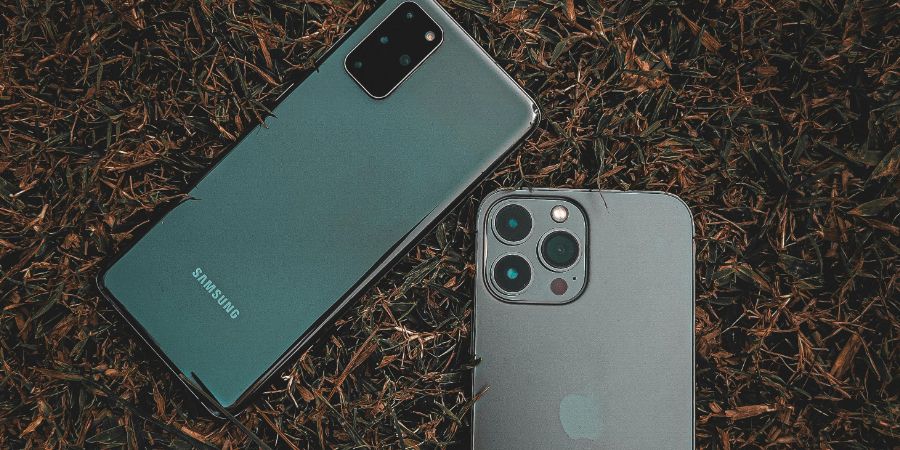


Most people who switched phone platforms in the last two years didn't do it because of specs. They did it because of a single app, a single frustration, or a single feature they couldn't get on the other side. The Android-versus-iPhone conversation has never really been about which phone is "better" in some abstract, universal sense. It's about which phone disappears into your life more completely — which one stops making you think about it. In 2026, both Android flagships and the iPhone 17 lineup have narrowed their gaps in some areas and widened them in others, often in ways that don't show up on a spec sheet.
The camera hardware is closer than ever, but the software processing philosophies have diverged sharply. The AI integrations are both impressive and fundamentally different in what they prioritize. And the pricing structures have shifted enough that the old "Android is the budget option" framing no longer holds. This article breaks down eleven specific dimensions of the choice — from display calibration and ecosystem lock-in to battery endurance and real-world AI usefulness — so you can figure out which trade-offs you're actually willing to make.
The 2026 Phone Choice Matters More Than It Did in 2024
A few years ago, you could reasonably argue that Android and iPhone had converged so much that it barely mattered which you picked. That argument has quietly fallen apart. The divergence in AI strategy alone — Apple's on-device-first approach versus Google's cloud-heavy model — creates meaningfully different daily experiences that compound over months of use. Your phone choice in 2026 shapes how your data is processed, where your photos are enhanced, and how much you trust the assistant living in your pocket.
The integration story has deepened on both sides too. Apple's ecosystem now ties the iPhone to the Vision Pro, Mac, iPad, Apple Watch, and HomePod in ways that create real friction if you try to leave. Google's counter-move has been to make Android the hub for a broader constellation of third-party devices — Wear OS watches from multiple brands, Chromebooks, smart home hardware from dozens of manufacturers, and cars running Android Automotive. Choosing a phone increasingly means choosing a philosophy about how tightly you want your devices coupled.
There's also a regulatory dimension that didn't exist before. The EU's Digital Markets Act has forced both Apple and Google to open up sideloading, alternative app stores, and default app choices in ways that change the practical experience depending on where you live. If you're in Europe, an iPhone in 2026 behaves differently than one sold in the US. That's new, and it matters. The old assumption that an iPhone is an iPhone everywhere isn't quite true anymore.
Platform switching costs have also risen. With years of app purchases, cloud storage subscriptions, smart home configurations, and messaging histories tied to one side, the decision to stay or leave carries real weight. The question isn't whether you should care about this debate — it's whether you can afford not to.
The Glass Sandwich Has a Rival Made of Titanium and Ceramic
Apple shifted its entire iPhone 17 Pro lineup to a titanium frame paired with ceramic-backed glass, and the result feels distinct — lighter than stainless steel but with a matte warmth that doesn't collect fingerprints the way previous models did. Samsung's Galaxy S26 Ultra, meanwhile, has doubled down on its angular, squared-off silhouette with an armor aluminum frame and Gorilla Glass Victus 4 on both sides. The Google Pixel 10 Pro took a different route entirely, using a recycled aluminum unibody with a soft-touch matte coating that's surprisingly grippy without a case.
Here's what surprises people: the build quality gap between a $1,200 flagship and a $450 mid-ranger has never been smaller. The Pixel 10a and Samsung Galaxy A56 use polycarbonate backs that genuinely feel pleasant in hand, and they survive drops that would shatter glass-backed phones. If you've ever cracked a Pro-level phone, you know the premium materials can be a liability as much as a luxury. The "premium" phone you baby in a thick case ends up feeling the same in daily use as the mid-range phone you carry confidently without one.
Thickness has become the new battleground. Apple trimmed the iPhone 17 Air to under 6mm, making it the thinnest mainstream phone available, though it sacrificed battery capacity and a second speaker to get there. Most Android flagships sit between 7.5mm and 8.5mm, prioritizing battery and thermal headroom over thinness. The trade-off is real and personal — some people want the phone that vanishes in a shirt pocket, and others want the one that lasts until midnight.
Water and dust resistance has reached IP69 on several flagships, meaning pressurized hot water jets won't kill them. For the vast majority of users, every phone in this tier survives anything short of deliberate abuse.
Why the Screen You Stare At for Five Hours Deserves More Scrutiny
Samsung's LTPO 5 AMOLED panels, used in both the Galaxy S26 series and supplied to Google for the Pixel 10 Pro, now hit a peak brightness of 3,200 nits in direct sunlight. The iPhone 17 Pro's display tops out around 2,800 nits. In practice, the difference is only noticeable if you hold them side by side outdoors — both are fully legible in harsh daylight. The more interesting gap is in color science. Apple continues to calibrate for accuracy, targeting the P3 color gamut with a slightly warm tone, while Samsung defaults to a vivid, punchy profile that most users prefer for social media and video but that photographers find unreliable for color-critical work.
Refresh rates have plateaued at 120Hz across flagships, and even the iPhone 17 standard model finally matches the Pro's adaptive refresh rate. The real differentiation has moved to touch sampling rates. Samsung and OnePlus phones now ship with 480Hz touch sampling, which creates a perceptible difference in scrolling responsiveness that Android users notice immediately after handling an iPhone. Apple's touch input pipeline compensates with superior animation smoothing, so the perceptual result is comparable despite the lower sampling rate — but it's a different kind of smooth.
Screen sizes have stabilized. The "standard" phone screen sits around 6.3 inches, while the large variants stretch to 6.8 or 6.9 inches. Foldable phones — the Galaxy Z Fold 7 and Google Pixel Fold 3 — offer inner displays above 7.5 inches, creating a genuinely different use case for reading, multitasking, and media consumption. Apple still hasn't shipped a foldable, and that absence is a real factor for the growing number of users who've tried folding phones and can't go back.
Display technology is no longer a differentiator in the way it was five years ago. The gap between a $500 phone display and a $1,200 phone display has shrunk to differences most people can't articulate without prompting. The choice here comes down to calibration philosophy, not hardware superiority.
The Benchmark Numbers Both Platforms Want You to Ignore
Apple's A19 Pro chip remains the single-core performance leader, and it's not close. In Geekbench 6, it outpaces the Snapdragon 8 Elite Gen 2 by roughly 15-20% in single-threaded tasks. But single-core dominance matters less in 2026 than it did in 2020, because the workloads that define daily phone use — AI inference, camera processing, multitasking — lean heavily on multi-core and neural engine performance, where Qualcomm has closed the gap significantly.
What actually shapes your day-to-day experience is sustained performance under thermal load. Open a graphically intense game, run it for 20 minutes, and measure how much the chip throttles. The iPhone 17 Pro's vapor chamber cooling keeps the A19 Pro running closer to peak performance for longer than most Android flagships, though the Galaxy S26 Ultra's larger thermal dissipation area makes it competitive during extended gaming sessions. The Pixel 10 Pro, with its Tensor G5, still runs warmer than either — Google's custom silicon prioritizes AI workloads over raw compute, and you can feel that trade-off in sustained graphical performance.
Where the performance conversation gets counterintuitive: most users can't tell the difference between any of these chips in normal use. App launches, scrolling, web browsing, messaging — they all feel instantaneous on a three-year-old flagship, let alone a 2026 model. The performance headroom matters for longevity, not for today. A phone with a faster chip today will feel responsive for an extra year or two before software demands catch up. Apple's historical advantage here is real — iPhones tend to receive OS updates and remain smooth for five to six years, while most Android phones start to struggle around year four, even with ongoing updates.
If you upgrade every two years, the chip barely matters. If you hold phones for four or more years, Apple's silicon advantage translates directly into usable lifespan.
Computational Photography Has Made Hardware Almost Irrelevant — Almost
Every major 2026 flagship — iPhone 17 Pro, Galaxy S26 Ultra, Pixel 10 Pro — produces excellent photos in good light. The differences emerge in three specific scenarios: low light, skin tones, and zoom. In low light, the Pixel 10 Pro's Night Sight still produces the most natural-looking results, preserving shadow detail without over-brightening the scene. The iPhone 17 Pro tends to lift shadows more aggressively, creating a look that's technically impressive but sometimes feels artificially "daytime." Samsung splits the difference but tends toward heavy noise reduction that smooths out textures.
Skin tones remain a philosophical divide. Apple's processing preserves texture and warmth, producing portraits that look like the person standing in front of you. Google's approach slightly smooths skin but gets color accuracy right more consistently across a wider range of skin tones — a result of years of deliberate algorithmic training. Samsung's skin processing has improved dramatically but still applies a subtle beauty filter by default that you need to manually disable in settings.
Zoom is where hardware still dictates outcomes. The Galaxy S26 Ultra's dedicated periscope lens offers genuine 5x optical and usable 30x digital zoom. The iPhone 17 Pro's tetraprism lens matches at 5x but falls behind in extreme digital zoom. The Pixel 10 Pro caps optical zoom at 5x with a smaller sensor, so its long-range shots rely more heavily on computational upscaling. If you regularly shoot concerts, wildlife, or sports, the S26 Ultra's zoom system remains the clear winner.
Video tells a different story. The iPhone 17 Pro's video stabilization, dynamic range, and audio capture remain a generation ahead. If video matters to you — and for an increasing number of creators, it's the primary use case — the iPhone is still the phone to beat.
The Invisible Walls You Don't Notice Until You Try to Leave
Apple's integration across devices isn't just a feature — it's a strategy designed to make leaving expensive. AirDrop, Universal Clipboard, Handoff, iMessage, FaceTime, and the ability to use your iPhone as a webcam for your Mac all work with zero configuration. If you own a Mac, an iPad, an Apple Watch, and AirPods, the iPhone is the glue that holds everything together. Remove it, and every other Apple device loses a layer of functionality. That's not an accident.
Android's integration story is broader but shallower. Google's ecosystem connects well with Chromebooks, Wear OS watches, and Nest smart home devices, but the experience varies by manufacturer. Samsung's Galaxy ecosystem — with DeX desktop mode, Link to Windows, and Galaxy Watch — offers the tightest Android integration, but it only works well within Samsung's own hardware family. A Pixel owner pairing with a Samsung watch gets a less polished experience than a Galaxy owner doing the same.
The messaging divide remains the single biggest ecosystem pain point. iMessage creates a social pressure loop, particularly among younger users in the US, where green bubbles still carry stigma. RCS adoption on Android has matured, and Apple finally added RCS support, but the experience of messaging between platforms still lacks the encryption, reaction compatibility, and media quality of native iMessage-to-iMessage or Google Messages-to-Google Messages conversations. Cross-platform messaging in 2026 is better than it was, but it's not solved.
Here's the uncomfortable truth: the deeper you are in either ecosystem, the less this article matters. Switching platforms after five years means losing saved Wi-Fi passwords across devices, repurchasing apps, reconfiguring smart home setups, and retraining muscle memory. The best phone for you might simply be the one that works with everything else you already own.
Your Phone Now Thinks for You — But With Very Different Priorities
Apple Intelligence and Google's Gemini represent two fundamentally different bets about what AI on a phone should do. Apple processes the majority of AI tasks on-device, using the Neural Engine in the A19 Pro. Your email summaries, photo searches, writing assistance, and Siri interactions happen locally, with data leaving the phone only when a task explicitly requires cloud processing through Apple's Private Cloud Compute infrastructure. The trade-off: Apple's AI responses are slower and sometimes less capable than Google's, because on-device models are smaller by necessity.
Google's approach with Gemini is cloud-first and unapologetically ambitious. The Pixel 10 Pro can generate detailed image edits, answer complex multi-step questions, and summarize entire email threads with a sophistication that Apple can't match locally. Gemini's integration into Google apps — Maps, Gmail, Photos, Calendar — creates an assistant that understands context across your digital life. The cost is that your data travels to Google's servers for processing, and your comfort with that depends on how much you trust Google's privacy commitments.
Samsung's Galaxy AI sits in an interesting middle ground, using a combination of on-device processing and cloud-based Gemini capabilities. Features like real-time call translation and Circle to Search work locally, while more complex tasks route through Google's infrastructure. It's the most practical AI suite for users who want capability without thinking too hard about the underlying architecture.
The AI feature most users actually rely on daily? Notification summaries. Both platforms now condense your alerts into digestible briefs, and the quality varies. Apple's summaries are conservative and occasionally miss nuance. Google's are more detailed but sometimes surface information you'd rather not see on a lock screen in public. The AI race isn't about which assistant is smarter — it's about which one respects the boundaries of your attention.
The Privacy Gap Is Real, But It's Not the Gap Most People Think
Apple markets itself as the privacy company, and the architecture backs that claim up — to a point. On-device processing for AI, App Tracking Transparency, iCloud Advanced Data Protection with end-to-end encryption, and hardware-level Secure Enclave protections all create meaningful barriers between your data and third parties. But Apple still collects analytics data, still operates an advertising platform within the App Store and Apple News, and still complies with government data requests when legally compelled. The privacy story is genuine but incomplete.
Google has made significant privacy improvements on Android, including the Privacy Dashboard, permission auto-revocation for unused apps, and the Private Compute Core that isolates sensitive data processing. Android 16 added more granular controls for location, camera, and microphone access. The issue isn't that Android lacks privacy tools — it's that Google's core business model depends on data collection, and the default settings reflect that. An Android phone configured by a privacy-conscious user can be quite locked down. An Android phone used with all defaults is considerably more permissive than an iPhone used the same way.
Security updates tell a revealing story. Apple pushes iOS updates to all supported devices simultaneously. Google does the same for Pixel phones, but the rest of the Android world depends on manufacturer timelines. Samsung has committed to seven years of updates for its flagships, matching Apple's track record, but many mid-range Android devices from other manufacturers still lag months behind on security patches. If you're buying a non-Google, non-Samsung Android phone, your security update experience is a gamble.
The counterintuitive insight: for most people, the biggest privacy threat isn't their phone's operating system — it's the apps they install and the permissions they grant without reading. A privacy-focused user on Android can achieve comparable protection to an average iPhone user. The difference is that Apple makes privacy the default, while Android makes it an option.
The Charge Anxiety That Won't Go Away — And What Actually Fixes It
Battery life in 2026 is finally at a point where most flagships can survive a full day of heavy use without a top-up. The Galaxy S26 Ultra, with its 5,500mAh cell, consistently delivers six to seven hours of screen-on time. The iPhone 17 Pro Max, despite a smaller battery around 4,700mAh, matches that figure thanks to iOS's aggressive background process management and the A19 Pro's efficiency cores. The Pixel 10 Pro lands between them, with solid endurance that occasionally dips during heavy AI processing tasks, reflecting the Tensor G5's thermal characteristics.
Charging speed is where Android pulls ahead decisively. OnePlus and Xiaomi offer 100W+ wired charging that takes a phone from empty to full in under 25 minutes. Samsung's 65W charging fills the S26 Ultra in about 45 minutes. Apple has bumped the iPhone 17 Pro to 45W wired charging, which is a meaningful improvement over previous years but still trails the fastest Android options by a wide margin. If you're someone who forgets to charge overnight and needs a quick boost before leaving the house, Android phones give you more runway in less time.
Wireless charging has standardized around Qi2 across both platforms, with magnetic alignment now available on most Android flagships in addition to all iPhones. The practical benefit is that wireless charging pads and car mounts work reliably across brands. MagSafe accessories remain exclusive to iPhone, but Qi2-compatible magnetic cases for Android phones have proliferated enough that the accessory gap is narrowing.
The often-overlooked factor is battery longevity — not how long your phone lasts in a day, but how well the battery holds up over years. Apple's adaptive charging and Samsung's battery health management features both cap charging at 80% to extend long-term cell health. If you keep phones for four or more years, this matters more than peak charging speed.
The $200 Phone That Does 90% of What a $1,200 Phone Does
The most disruptive development in the phone market isn't a flagship feature — it's that mid-range phones have become genuinely good. The Pixel 10a, expected around $499, delivers Google's AI features, a capable camera with the same processing pipeline as the Pro, and seven years of software updates. Samsung's Galaxy A56 at $449 includes a 120Hz AMOLED display, IP67 water resistance, and five years of updates. These aren't compromised phones with asterisks — they're phones that satisfy 90% of users' actual needs.
Apple's entry point is the iPhone 17, starting at $799, which remains significantly more expensive than the best Android mid-rangers. The iPhone SE 4, positioned around $499, offers Apple's ecosystem and most current software features but with compromises in camera capability and display size. Apple's value proposition depends entirely on how much you value the iOS ecosystem and the longevity of the hardware — an iPhone SE 4 will likely run well for five to six years, which amortizes the upfront cost differently than the sticker price suggests.
Flagship pricing has continued to climb. The iPhone 17 Pro Max starts at $1,199, the Galaxy S26 Ultra at $1,299, and the Pixel 10 Pro at $999. The gap between these prices and the quality of $400-500 phones creates a genuine question: what are you paying the extra $700 for? The answer is specific: a better camera zoom system, faster sustained performance, more refined build materials, and — increasingly — a better AI experience with larger on-device models. Those are real differences. Whether they're $700 worth of difference depends on your usage patterns.
Trade-in programs, carrier installment plans, and manufacturer financing have made flagship pricing feel abstract for many buyers. But the total cost of ownership — including cases, chargers, cloud storage subscriptions, and AppleCare or Samsung Care — adds up. The honest budget calculation rarely happens before purchase, and it should.
The Phone That Fits Your Life Isn't the One With the Best Score
If you own a Mac, an iPad, and an Apple Watch, buying an Android phone is an act of self-sabotage. The integration between Apple devices saves you minutes every day — clipboard sharing, AirDrop transfers, unlocking your Mac with your watch, answering calls on your laptop. No Android phone, regardless of how good it is, replaces that connective tissue. The iPhone is the obvious choice for deep Apple users, and the ecosystem lock-in, while constraining, delivers genuine daily value.
If you want maximum customization — home screen layouts, default app control, file system access, sideloading without restrictions, and automation via tools like Tasker — Android gives you a level of control that iOS still doesn't match, even after EU-mandated changes. Power users who configure their phones to work exactly the way they think will feel constrained by an iPhone within a week.
For photographers and content creators who prioritize video, the iPhone 17 Pro remains the stronger choice. For those who prioritize zoom photography or want the flexibility of shooting in different aspect ratios and modes, Samsung's Galaxy S26 Ultra offers more versatility. Google's Pixel line appeals to users who value computational photography and a clean software experience without manufacturer bloat.
Budget-conscious buyers should look at Android first. The quality available at the $300-500 price range on Android simply doesn't exist in Apple's lineup. If you don't need the Apple ecosystem and you want a phone that performs well without a four-figure investment, Android offers more viable options.
Privacy-focused users who don't want to configure settings manually will find the iPhone's defaults more protective. Privacy-focused users who enjoy tinkering can make Android equally secure but should expect to invest time upfront. The choice, as always, is between convenience and control.
The phone market in 2026 isn't about one platform being objectively superior. It's about two mature operating systems that have made deliberate, often opposite choices about what matters most. Apple chose integration, consistency, and controlled experiences. Google and its Android partners chose flexibility, variety, and openness. Both choices have costs. Both deliver real benefits. The right phone isn't the one that wins the most categories in a comparison chart — it's the one whose trade-offs you'll never notice because they don't intersect with the way you actually use a phone. The most expensive mistake you can make isn't buying the wrong brand; it's buying the right specs for someone else's life.