

A spoonful of sauerkraut, sharp and briny, piled onto a sausage in a Berlin beer hall tastes nothing like the soft, funky tang of a three-day-old dosa batter spooned onto a hot griddle in Chennai. Yet both owe their character to the same ancient process: fermentation. Microorganisms — bacteria, yeasts, molds — transforming simple ingredients into something more complex, more alive, more nutritious. For most of human history, this wasn't a wellness trend. It was survival. Fermentation preserved cabbage through Russian winters, turned milk into yogurt across the Central Asian steppe, and made cassava safe to eat in West Africa.
Now, after decades of being sidelined by refrigeration and industrial food processing, fermented foods are reclaiming space on grocery shelves and dinner plates. The reasons aren't purely nostalgic. A growing body of research links the live cultures in fermented foods to measurable shifts in gut health, immune function, and even mood. This isn't about chasing the next superfood. It's about understanding something your ancestors already knew — that the best food isn't sterile. It's teeming with life.
Your Gut Has Been Trying to Tell You Something — Fermented Foods Are the Answer
Bloating after a meal, unexplained fatigue, a skin breakout that won't resolve — these signals often get treated as isolated problems. A Tums here, a coffee there, a new cleanser. But your gut microbiome, that dense colony of trillions of bacteria living in your intestines, may be sending a unified message: something is off in the ecosystem you've built through years of eating.
The modern Western diet has done a remarkably efficient job of starving beneficial gut bacteria. Processed foods, refined sugars, and the widespread use of antibiotics have reduced microbial diversity in ways that researchers are only beginning to map. A 2021 study published in Cell found that a diet high in fermented foods increased microbial diversity and decreased markers of inflammation in participants over just ten weeks. Not supplements. Not probiotics in capsule form. Actual fermented food, eaten daily.
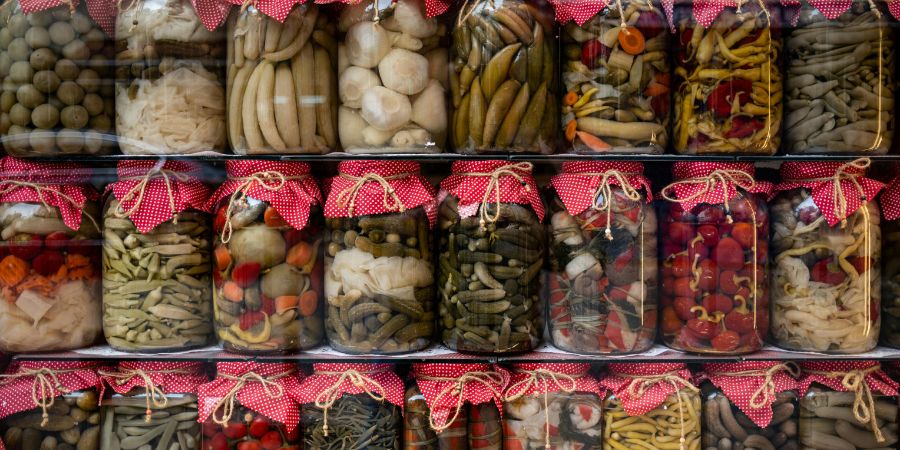
Here's what's counterintuitive: your gut doesn't necessarily need more of a specific "good" bacterium. It needs variety. The same way a forest thrives on biodiversity rather than a monoculture of one tree species, your intestinal flora performs best when populated by a wide range of microbial strains. Fermented foods deliver exactly that kind of variety, because each ferment — whether it's kefir, miso, or a jar of naturally pickled green beans — hosts its own distinct community of organisms.
The signals your body sends aren't random noise. They're feedback from a system that evolved alongside microbial life and still depends on it. Ignoring that relationship is easy when the grocery store offers ten thousand products engineered for shelf stability. Repairing it starts with reintroducing the living foods your gut was designed to process — the ones that fizz, bubble, and smell a little funky.
From Kimchi in Korea to Kanji in India — Fermented Foods Have Always Been on Our Tables
Fermentation isn't a discovery. It's an inheritance. Long before anyone understood lactobacillus or acetic acid bacteria, cultures across every continent were fermenting food out of necessity and refining the process into art. Korean households have buried onggi jars of kimchi underground for centuries, relying on cool earth temperatures to slow fermentation and develop that deep, sour heat. In Japan, miso paste ages for months — sometimes years — in cedar barrels, developing an umami so concentrated it can anchor an entire bowl of soup with a single tablespoon.
India's fermented traditions run broader than most people realize. Kanji, a pungent purple drink made from black carrots, mustard seeds, and water, ferments for days in the late-winter sun across North India. Idli and dosa batters rely on overnight fermentation of rice and black gram to achieve their characteristic tang and airy texture. Dhokla, from Gujarat, gets its spongy rise from fermented chickpea flour. These aren't niche preparations. They're daily staples.
Ethiopia's injera, that spongy, sour flatbread made from teff flour fermented for several days, serves as both plate and utensil. In Iceland, hakarl — fermented shark — is an acquired taste that links modern Icelanders to a Viking-era method of making otherwise toxic Greenland shark safe to eat. The technique is brutal. The result is polarizing. But it works.
What's striking is how independently these traditions emerged. No one taught Korean grandmothers and Rajasthani cooks the same technique. Fermentation arose wherever humans needed to preserve food without refrigeration, and the local ingredients shaped the outcome. The global resurgence of interest in these foods isn't a new chapter. It's a return to a very old one, with the science finally catching up to explain why these traditions persisted.
What Happens Inside That Jar — The Biochemistry of Fermentation
Fermentation is controlled decay. That description unsettles people, but precision matters here. Microorganisms — primarily bacteria and yeasts — consume sugars and starches in food, producing acids, gases, and alcohol as byproducts. Those byproducts are what preserve the food, alter its flavor, and generate the beneficial compounds that make fermented foods worth eating. The process is anaerobic in many cases, meaning it happens without oxygen, which is why so many ferments involve sealed jars, submerged vegetables, or weighted crocks.
Lactic acid fermentation is the most common type you'll encounter in food. Lactobacillus bacteria convert sugars into lactic acid, which drops the pH of the food low enough to inhibit the growth of harmful pathogens. This is what happens when cabbage becomes sauerkraut, cucumbers become pickles (real ones, not the vinegar-brined supermarket kind), and milk becomes yogurt. The lactic acid also creates that signature sour taste — clean and bright in young ferments, deeper and more complex as time goes on.
Acetic acid fermentation gives you vinegar. Alcoholic fermentation, driven by yeasts like Saccharomyces cerevisiae, produces beer, wine, and bread. Kombucha involves a symbiotic colony of bacteria and yeast — a SCOBY — that ferments sweetened tea into a tart, slightly effervescent drink through a combination of these pathways.
The part most people miss: fermentation doesn't just preserve food. It creates new nutrients. B vitamins increase during fermentation. Anti-nutrients like phytic acid, which can block mineral absorption, break down. Proteins get partially digested into more bioavailable forms. A bowl of fermented lentils delivers more usable nutrition than the same lentils cooked without fermentation. The jar on your counter isn't just sitting there. It's working.
Thirty Feet of Intelligence — Why Your Gut Runs More Than Digestion
Your gastrointestinal tract stretches roughly thirty feet from mouth to exit, and it contains more nerve cells than your spinal cord. Scientists call it the enteric nervous system — colloquially, the "second brain." This isn't metaphor. Your gut produces about 95 percent of the serotonin in your body, a neurotransmitter most people associate exclusively with the brain and mood regulation. The gut-brain axis, a bidirectional communication highway running along the vagus nerve, means that what happens in your intestines directly influences your mental state.
The gut microbiome — that community of roughly 38 trillion microorganisms — participates in functions far beyond breaking down last night's dinner. It trains the immune system, synthesizes vitamins K and B12, metabolizes drugs, and helps regulate body weight. An imbalanced microbiome, a condition researchers call dysbiosis, has been linked to conditions as varied as irritable bowel syndrome, type 2 diabetes, depression, and autoimmune disorders.
Diversity is the key metric. A healthy gut microbiome contains hundreds of distinct bacterial species, each filling a functional niche. Lose too many species — through poor diet, chronic stress, or repeated antibiotic courses — and the remaining organisms can't compensate. Opportunistic bacteria fill the gaps, often triggering low-grade chronic inflammation that feeds a cascade of downstream problems.
Fermented foods matter here because they introduce live microorganisms directly into this system while also providing the organic acids and prebiotics that feed existing beneficial bacteria. A daily serving of plain yogurt or a few forkfuls of kimchi won't cure a disease. But over time, they help maintain the kind of microbial richness that keeps the whole thirty-foot system communicating properly — with your brain, your immune cells, and every organ that depends on a functioning gut barrier.
Seven Ferments Worth Knowing by Name, Taste, and Origin
Not all fermented foods are created equal, and not all of them contain live cultures by the time they reach your plate. Pasteurization kills beneficial bacteria, which means the sauerkraut in a can on the shelf and the sauerkraut in the refrigerated section are fundamentally different products. Here are fermented foods worth seeking out — and understanding:
- Kimchi — Korea's national side dish, made from napa cabbage, gochugaru (red pepper flakes), garlic, ginger, and fish sauce. Young kimchi is crisp and bright; aged kimchi turns deeply sour and works beautifully in stews and fried rice.
- Kefir — A tangy, drinkable fermented milk originating from the Caucasus Mountains. It contains a broader range of bacterial strains than yogurt, including yeasts that yogurt cultures lack.
- Miso — Japanese fermented soybean paste, aged from weeks to years. White miso is mild and sweet; red miso is assertive, salty, and deeply savory.
- Tempeh — Indonesian fermented soybeans bound by Rhizopus mold into a firm, nutty cake. Unlike tofu, tempeh retains the whole bean and its fiber.
- Sauerkraut — Raw, unpasteurized sauerkraut is a potent source of Lactobacillus. Two ingredients: cabbage and salt. Anything more is unnecessary.
- Kombucha — Fermented sweetened tea. The best versions are tart and only lightly sweetened. Many commercial brands add enough sugar to undercut the benefits.
- Kanji — North Indian fermented carrot water, spiced with mustard seeds. It's pungent, probiotic-rich, and almost entirely unknown outside South Asia.
Each of these carries its own microbial signature. Rotating between several fermented foods, rather than relying on one, exposes your gut to the widest possible range of beneficial organisms — which is precisely the point.
What the Research Actually Shows — Benefits You Can Measure
The Stanford study published in Cell in 2021 remains one of the most cited pieces of evidence for fermented food benefits. Over a ten-week period, participants who ate six or more servings of fermented foods daily showed a significant increase in gut microbial diversity and a measurable decrease in 19 inflammatory proteins, including interleukin-6, a marker associated with rheumatoid arthritis, type 2 diabetes, and chronic stress. A high-fiber diet, tested in the same study, did not produce the same anti-inflammatory effect in the short term.
Gut health improvements cascade outward. Fermented dairy products like yogurt and kefir have been associated with improved lactose digestion, because the fermentation process partially breaks down lactose before it reaches your intestines. People who can't tolerate a glass of milk often handle a cup of kefir with no discomfort. The bacteria do the work your body struggles with.
Emerging research points to mental health connections. A 2022 study in Molecular Psychiatry found that participants consuming a psychobiotic diet — rich in fermented foods, fruits, vegetables, and grains — reported reduced perceived stress compared to a control group. The mechanism appears to involve short-chain fatty acids produced by gut bacteria, which cross the blood-brain barrier and influence neurotransmitter production.
Fermented foods also enhance nutrient bioavailability. Iron absorption from fermented grain porridges is higher than from unfermented versions, a finding with real consequences in regions where iron deficiency remains a public health problem. Vitamin B12 levels increase in fermented soy products. The food you eat doesn't just matter for its raw nutrient content — it matters for how much of that nutrition your body can actually extract. Fermentation tilts the equation in your favor.
The Fine Print — What Fermented Foods Won't Fix and What to Watch
Fermented foods are not medicine, and treating them as such sets you up for disappointment. No amount of kimchi will reverse a chronic disease or replace prescribed treatment for a serious gut disorder. People with histamine intolerance — a condition where the body struggles to break down histamine — may find that fermented foods actually worsen symptoms like headaches, hives, and digestive distress, because fermentation increases histamine levels in food. Aged cheeses, sauerkraut, and kombucha are among the highest histamine offenders.
Sodium is another consideration. Traditional fermented vegetables rely on salt to create the environment where beneficial bacteria thrive and harmful ones don't. A generous serving of kimchi or miso can deliver a significant portion of your daily sodium intake. If you're managing hypertension or following a low-sodium diet, that tradeoff deserves attention rather than dismissal.
Commercial products demand skepticism. Many items marketed as fermented have been pasteurized after fermentation, killing the live cultures that provide the probiotic benefit. Check the label for "contains live active cultures" and look for products in the refrigerated section. Shelf-stable "kombucha" with 30 grams of added sugar per bottle is essentially soda with good branding. Read the ingredients, not the marketing copy.
Start slowly if fermented foods are new to your diet. Introducing large amounts of live cultures and fiber to a gut that isn't accustomed to them can cause gas, bloating, and digestive discomfort — the very symptoms you're trying to fix. A tablespoon of sauerkraut with dinner, a small glass of kefir in the morning. Build from there. Your microbiome needs time to adjust, and the bacteria colonizing your gut need weeks, not days, to establish meaningful populations. Patience is the ingredient no one wants to add, but it's the one that makes the rest work.
The fermented food revival isn't really a revival at all. It's a correction — a slow recognition that the industrialized food system, for all its convenience, stripped away something essential. The live cultures in a jar of homemade pickles or a bowl of curd rice aren't exotic supplements. They're the baseline our digestive systems evolved to expect. The science is catching up to what Korean grandmothers, Indian home cooks, and Japanese miso makers have practiced for generations: food should be alive when you eat it, and your body knows the difference. The most radical thing you can do for your health might be the oldest thing humans ever did with a cabbage and some salt.