
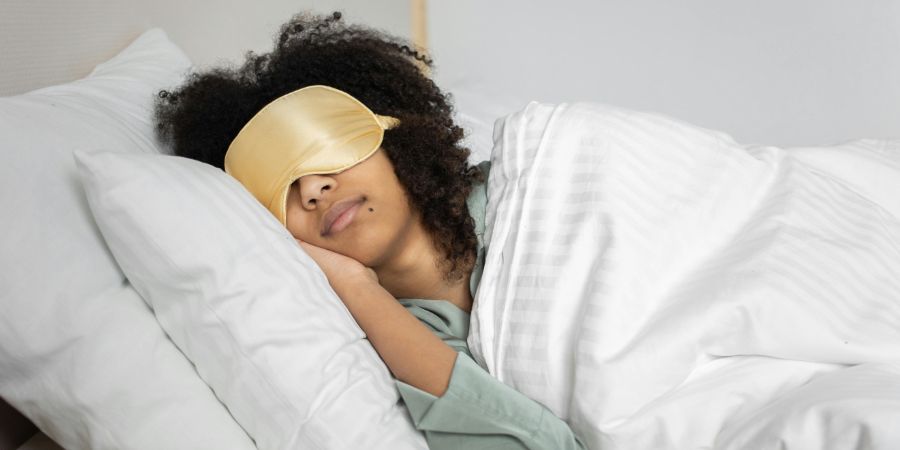


A third of adults in the United States regularly sleep fewer than seven hours a night, according to data from the Centers for Disease Control and Prevention. That's not a lifestyle choice for most of them — it's a slow erosion they barely notice until the consequences show up as weight gain, impaired memory, or a car accident on a Tuesday commute. The strange thing about sleep deprivation is that it degrades your ability to recognize you're sleep-deprived. You lose the very instrument you'd need to measure the loss.
The question of how much sleep you actually need sounds simple, but the answer has shifted substantially as researchers have developed better tools to study what happens inside a sleeping brain. The old rule of eight hours, repeated so often it became a kind of folk truth, turns out to be both approximately right and dangerously incomplete. Sleep isn't a single commodity you can measure in bulk. The architecture of your sleep — its stages, timing, and continuity — matters as much as the total hours.
What follows is a careful look at the current science: how researchers measure sleep needs, what your body does during the night, why those needs change with age, and what happens when the gap between what you need and what you get grows too wide. The goal isn't to make you anxious about your sleep. It's to help you understand it well enough to protect it.
The Last Two Decades Rewired Nearly Everything Researchers Thought They Knew About Sleep
For most of the twentieth century, sleep was treated as a passive state — the brain's version of shutting down for the night. Researchers could measure brain waves with electroencephalography, and they knew about REM sleep since its discovery in 1953, but the dominant framework treated sleep as an absence of waking rather than a process with its own biological agenda. That changed dramatically beginning in the late 1990s, when neuroimaging technology allowed scientists to watch the sleeping brain in action.
Functional MRI studies revealed that specific brain regions don't just idle during sleep — they reorganize, firing in coordinated patterns that differ sharply from waking activity. The discovery of the glymphatic system in 2012 by Maiken Nedergaard's lab at the University of Rochester was a genuine breakthrough. It showed that cerebrospinal fluid floods the brain during deep sleep, clearing metabolic waste products, including beta-amyloid, the protein implicated in Alzheimer's disease. Sleep wasn't rest. It was maintenance.
Genetic research added another dimension. Scientists identified clock genes — like PER and CRY — that regulate circadian rhythms at the molecular level, and they began to understand why some people genuinely function on less sleep while others cannot. The short-sleep gene variant DEC2, identified in 2009, explained a small fraction of naturally short sleepers, but it also proved that most people who claim to need only five hours are simply accustomed to impairment.
The counterintuitive lesson from all this research is that sleep turned out to be far more active, more biologically expensive, and more individually variable than anyone assumed when the eight-hour recommendation was first popularized. The simplicity of the old advice masked a process of staggering complexity. Understanding that complexity doesn't require a neuroscience degree — but it does require letting go of the notion that sleep is just downtime.
Your Brain Runs a Five-Stage Recycling Operation Every Ninety Minutes
Sleep unfolds in cycles, each lasting roughly ninety minutes, and each cycle contains distinct stages that serve different functions. The first stage, N1, is the shallow transition between waking and sleeping — it lasts only a few minutes and is easily disrupted. N2 follows, accounting for about half of total sleep time in most adults. During N2, your heart rate slows, your body temperature drops, and your brain produces sleep spindles: brief bursts of electrical activity that appear to play a role in consolidating motor learning and filtering sensory input.
N3, the deepest stage of non-REM sleep, is where the most physically restorative work occurs. Growth hormone secretion peaks during N3. The glymphatic clearance system operates most efficiently here. Blood pressure drops to its lowest point of the day, and tissues repair themselves. If you've ever woken from a nap feeling groggy and disoriented, you likely interrupted an N3 phase — a phenomenon called sleep inertia.
REM sleep, the stage most associated with vivid dreaming, dominates the later cycles of the night. During REM, your brain is nearly as active as it is while you're awake, but your voluntary muscles are temporarily paralyzed — a protective mechanism that prevents you from acting out dreams. REM sleep appears critical for emotional regulation and the consolidation of complex, associative memories. People deprived selectively of REM sleep show measurable deficits in creative problem-solving.
The surprising implication is that sleeping six hours instead of seven and a half doesn't just cost you ninety minutes — it disproportionately eliminates REM sleep, which clusters in the final cycles. You lose the stage you can least afford to miss. This asymmetry is why modest reductions in total sleep time can produce outsized cognitive effects, even when you feel reasonably alert the next day.
The Gap Between What a Study Measures and What Your Body Needs
Determining how much sleep a person needs is harder than it sounds, because researchers must distinguish between how much sleep you can survive on and how much you need to function optimally. These are very different thresholds. Most sleep-need research relies on one of three approaches: epidemiological studies that correlate self-reported sleep duration with health outcomes, laboratory studies that restrict sleep and measure performance changes, or actigraphy studies that track sleep patterns in natural settings over extended periods.
Each method has limitations. Epidemiological studies depend on people accurately reporting their sleep, which they reliably do not — most people overestimate their sleep duration by thirty to sixty minutes. Laboratory restriction studies can measure cognitive decline with precision, but they often use young, healthy subjects in artificial conditions that don't mirror real life. Actigraphy provides objective data but can't distinguish between lying still and actually sleeping.
The landmark study most often cited is the 2003 research led by Hans Van Dongen and David Dinges at the University of Pennsylvania. They restricted subjects to four, six, or eight hours in bed per night for fourteen consecutive days, then tested cognitive performance. The six-hour group showed cumulative deficits that, by day fourteen, matched the impairment of someone who had been totally sleep-deprived for two full days. Crucially, the six-hour sleepers rated their own sleepiness as only mildly increased. They had no idea how impaired they were.
This blind spot is the most unsettling finding in sleep science. Your subjective sense of how rested you feel adapts quickly to insufficient sleep, creating a false baseline. You stop noticing the deficit, but your reaction times, judgment, and memory don't recover just because you've stopped noticing. The gap between felt alertness and actual performance is where most real-world consequences of sleep loss hide.
A Newborn and a Teenager Have Almost Nothing in Common Except Their Need for More Sleep Than They Get
Sleep needs change across the lifespan in ways that are biologically driven, not just habitual. The National Sleep Foundation's expert panel, which published updated recommendations in 2015 after reviewing 312 studies, provides the most widely referenced age-based guidelines. Newborns need fourteen to seventeen hours. Infants aged four to eleven months need twelve to fifteen. Toddlers between one and two years require eleven to fourteen hours, while preschoolers need ten to thirteen.
School-age children between six and thirteen years do best with nine to eleven hours, a target that many families find difficult to hit once homework, extracurriculars, and screen time enter the picture. Teenagers, aged fourteen to seventeen, need eight to ten hours — and here the biology creates a particular conflict. Puberty shifts the circadian clock later, making it genuinely difficult for most adolescents to fall asleep before 11 p.m. Yet school start times in most districts demand waking before 7 a.m., guaranteeing a structural sleep deficit that the American Academy of Pediatrics has called a significant public health issue.
Adults aged eighteen to sixty-four need seven to nine hours. The range exists because individual variation is real, shaped by genetics, physical activity level, and overall health status. Older adults, sixty-five and above, need seven to eight hours, though they often sleep less due to changes in sleep architecture — lighter sleep, more frequent awakenings, and reduced deep sleep stages.
The counterintuitive finding here is that older adults don't actually need less sleep than younger adults by a large margin. They need roughly the same amount but have a harder time obtaining it. The common belief that aging naturally reduces sleep need has been used to dismiss insomnia in elderly patients as normal, when it often signals treatable conditions like sleep apnea, restless leg syndrome, or medication side effects that deserve clinical attention.
The Deficits You Stop Noticing Are the Ones That Cost You the Most
Chronic sleep deprivation rarely announces itself with dramatic symptoms. It accumulates quietly, mimicking other conditions so effectively that many people seek treatment for problems that are, at root, sleep problems. Persistent difficulty concentrating, for example, is frequently attributed to stress or aging when insufficient sleep is the primary driver. Irritability that strains relationships gets labeled a personality issue. Weight gain that resists dietary changes may be fueled by sleep-driven hormonal shifts — specifically, elevated ghrelin and suppressed leptin — that increase appetite and favor calorie-dense food choices.
The signs worth paying attention to include:
- Needing an alarm clock every morning to wake up, and struggling to function without one on weekends.
- Falling asleep within five minutes of lying down, which suggests excessive sleep pressure rather than healthy tiredness.
- Requiring caffeine to maintain baseline alertness past midmorning.
- Microsleeps — brief, involuntary lapses in attention lasting a few seconds — during meetings, while reading, or while driving.
- Catching every cold that circulates through your household or office, reflecting the well-documented relationship between sleep restriction and reduced immune function.
A 2004 study in the journal Sleep found that people sleeping fewer than six hours per night were 4.2 times more likely to catch a cold when exposed to a rhinovirus than those sleeping more than seven hours. That's a more powerful effect than age, stress level, or smoking status produced in the same study.
Perhaps the most insidious sign is emotional flatness — a muted response to things that would normally interest or delight you. Sleep-deprived individuals show increased amygdala reactivity to negative stimuli and decreased prefrontal cortex modulation, a pattern that resembles mild depression. Some portion of what gets treated as subclinical depression may, in fact, be treatable sleep deprivation wearing a clinical mask.
Your Phone Is Not Keeping You Awake the Way You Think It Is
The conventional warning about screens and sleep focuses on blue light — the short-wavelength light emitted by phones, tablets, and laptops that suppresses melatonin production. That's a real mechanism. Research from Harvard's Charles Czeisler has shown that evening exposure to blue-enriched light delays melatonin onset by roughly ninety minutes compared to dim-light conditions. But the blue-light story has been somewhat oversold, partly by companies eager to market blue-light-filtering glasses and screen settings.
A 2019 study from Brigham Young University found that the behavioral content of phone use — scrolling social media, reading anxiety-provoking news, responding to messages — had a larger effect on sleep onset latency than the light itself. Night-shift modes that warm the screen's color temperature provided minimal sleep benefit when people continued engaging with stimulating content. The problem isn't primarily photonic. It's psychological. Your phone keeps your brain in a state of vigilant engagement that directly opposes the mental deceleration sleep requires.
The timing of technology use matters as much as the type. Using a device thirty minutes before bed produces measurably different effects than using the same device ninety minutes before bed. The sleep-onset delay shrinks significantly with that additional hour of buffer, regardless of whether a blue-light filter is active. This suggests that the brain needs transition time — a decompression period — between stimulation and sleep.
Television, interestingly, tends to be less disruptive than handheld devices, not because of any difference in light emission but because it's a passive medium held at a greater distance. The act of holding a screen close to your face and interacting with it — choosing, swiping, typing — sustains cortical arousal in a way that watching a familiar show from across the room does not. The simplest intervention isn't buying special glasses. It's putting the phone in another room an hour before you intend to sleep.
One Rule, No Tricks, and the Discipline to Protect It
Sleep advice has become a crowded, sometimes contradictory space. Weighted blankets, melatonin supplements, sleep trackers, white noise machines, magnesium sprays, CBD tinctures — the market for sleep optimization grows each year, and much of it distracts from the single most effective intervention available. That intervention is consistency. Going to bed and waking up at the same time every day, including weekends, does more for sleep quality than any product you can buy.
The reason is circadian. Your internal clock, governed by the suprachiasmatic nucleus in the hypothalamus, synchronizes dozens of physiological processes — hormone release, body temperature regulation, digestive enzyme production — to a predicted sleep-wake schedule. Every time you shift that schedule by sleeping in on Saturday or staying up late on Friday, you force a partial resynchronization that resembles a mild version of jet lag. Two days of irregular timing can produce measurable disruption in cortisol patterns that persists into the following week.
A consistent wake time is more important than a consistent bedtime, because morning light exposure is the primary signal that sets your circadian phase. If you fix the wake time, the bedtime tends to follow naturally as sleep pressure accumulates during the day. Getting outdoor light exposure within the first hour of waking — even on cloudy days, when outdoor light still provides 10,000 lux compared to about 500 indoors — strengthens this signal substantially.
The difficulty, of course, is that consistency is boring. It doesn't feel like progress. It doesn't generate the satisfaction of buying a new pillow or downloading a sleep app. But the evidence from circadian biology is unambiguous: regularity is the foundation, and everything else is decoration. You don't need to optimize sleep. You need to stop disrupting it.
The question you started with — how much sleep do you actually need — has a straightforward numerical answer for most adults: somewhere between seven and nine hours, depending on your age, genetics, and health. But the more useful answer lives in the details that surround that number. The architecture of your sleep matters. The consistency of your schedule matters. Your ability to recognize impairment matters, especially because that ability degrades precisely when you most need it. Sleep is not a luxury you earn after everything else is done. It is the biological precondition that determines how well everything else gets done. The most productive thing you may do tomorrow is something you have to start tonight.